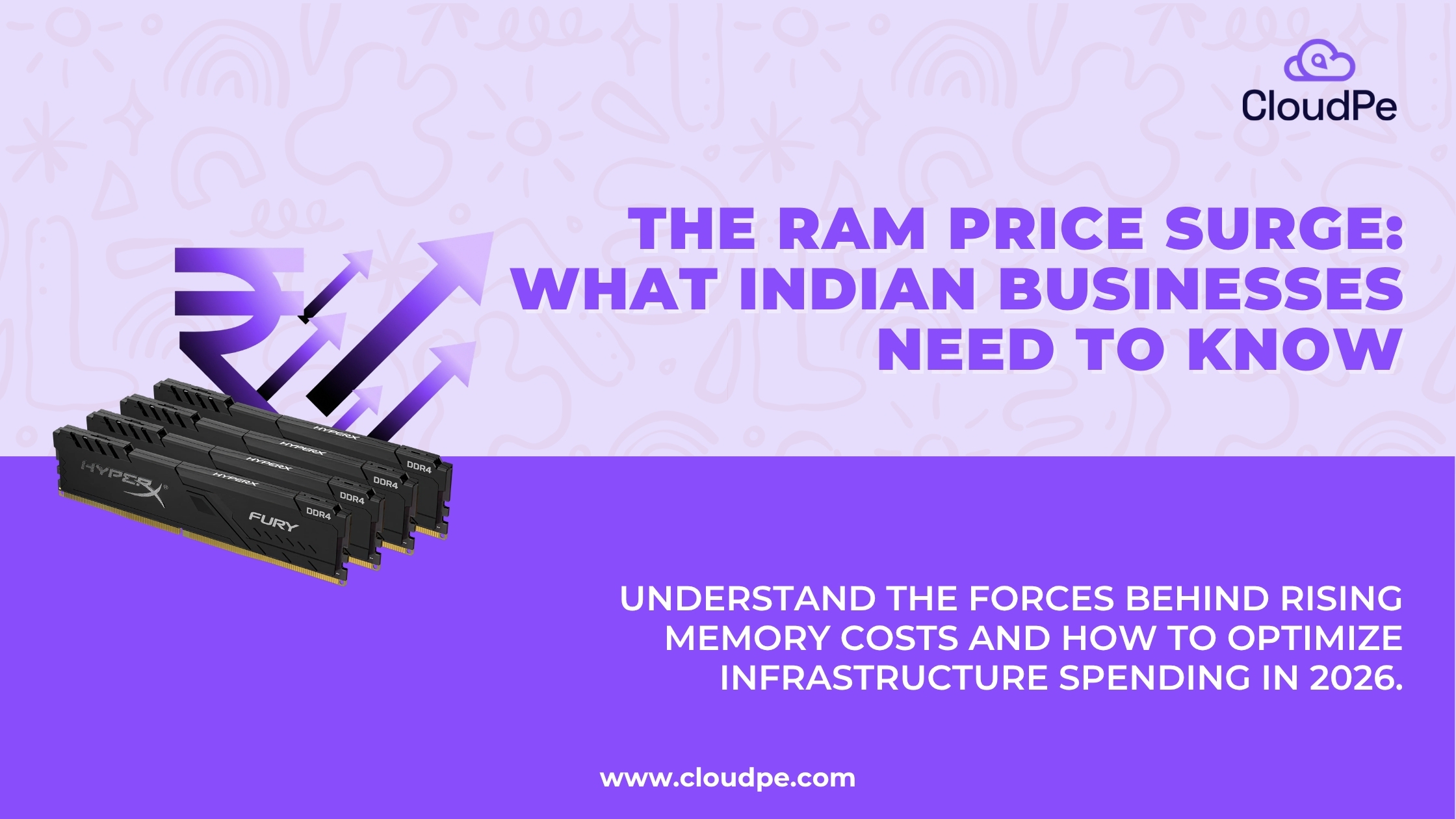
A year ago, a 32GB DDR5 kit cost around ₹8,000. Today, that same kit can cost you ₹25,000 to ₹30,000.
That’s not a typo. It’s roughly a 300% jump in about twelve months, and it’s part of a much bigger ram price increase playing out across the world, hitting India harder than most. If you run servers, applications, or databases for your business, this isn’t a “wait for the sale” problem. It’s a real cost line that changed shape almost overnight.
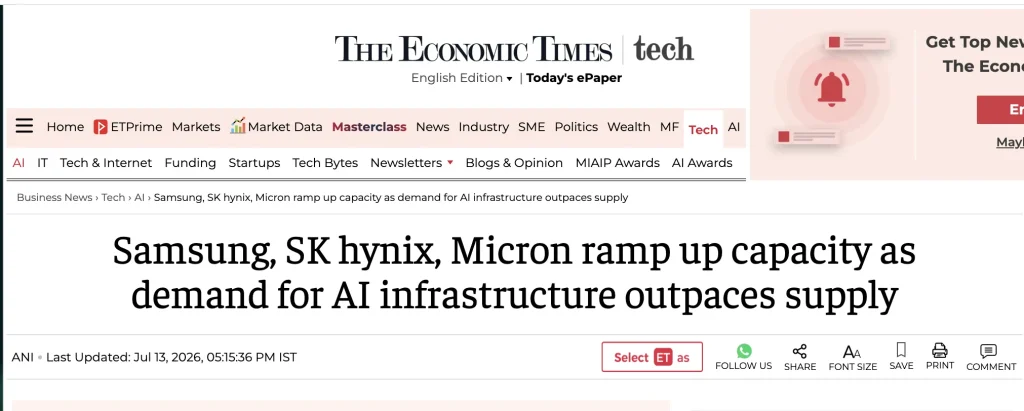
June 25, 2026 → Big 3 got sued
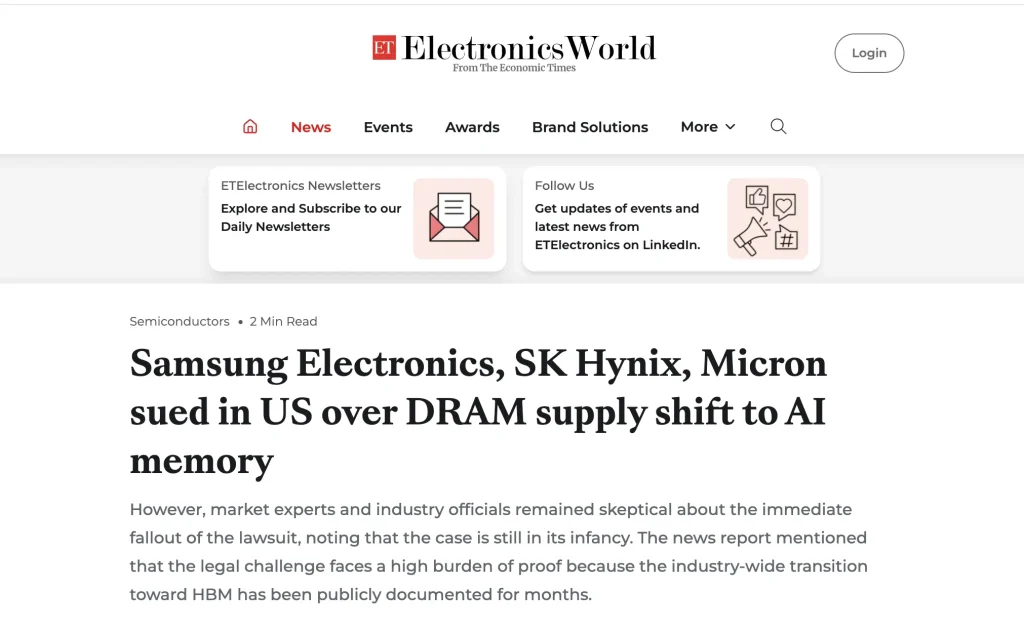
June 29, 2026 → the big 3 announced that they will be investing to increase the capacity
Here’s what’s actually driving it, and a straight answer on when it ends.
How much have RAM prices actually gone up
Quick numbers first:
- DDR5 kits: up 300-400% since late 2025 (Tom’s Hardware, TrendForce). A 32GB DDR5-6000 kit that sold for under $90 in 2025 now goes for $350 to $500 in some markets.
- DDR4: up over 170% on spot prices, even though it’s the “older” standard. In some cases, DDR4 now costs more than DDR5.
- Why DDR4 is pricier than expected: manufacturers are shutting down DDR4 production faster than DDR5 production, so the older chip is actually running short first.
What this looks like in INR
| RAM type | Price per GB (RamRadar, mid-Aug 2026) | Approx. 32GB kit, component cost |
| DDR5 | $15.27/GB | ~₹40,000-42,000 |
| DDR4 | $7.61/GB | ~₹20,000-21,000 |
Either way, the direction is clear. RAM went from a routine upgrade to a real budget line, in both the DDR4 and DDR5 world.
Why is this actually happening
There are a lot of reasons why this sudden surge of price. Or maybe it wasn’t sudden at all (that’s a question I will leave for your curiosity to answer.
Wait, isn’t RAM made by tons of companies
You’ve probably seen a dozen RAM brand names while shopping: Kingston, Corsair, G.Skill, Crucial, ADATA, Team Group. Looks like a crowded market. It isn’t, not where it counts.
Only three companies actually manufacture the DRAM chip:
- Samsung
- SK Hynix
- Micron
Together, they make more than 90% of the world’s DRAM.
Everyone else is an assembler, not a manufacturer. Kingston, Corsair, G.Skill, ADATA, and the rest buy finished chips from those three, then test, package, and brand the kit as their own.
This is exactly why the price spike hit every brand at once. No “budget brand” was ever going to dodge it. If the three companies making the actual silicon pull back, everyone buying from them feels it, whether the sticker says Kingston or a name you’ve never heard of.
Now let’s get to the real reasons for the increase in RAM prices.
1. AI is eating the world’s memory supply
Large AI models don’t just need computing power. They need enormous amounts of high bandwidth memory (HBM), a different, higher-margin category from the RAM in your servers.
- HBM sells at a much higher margin than standard DRAM
- When a chipmaker chooses between building HBM for AI data centres or DRAM for everyone else, it builds HBM
- IDC projects DRAM supply will grow only around 16% in 2026, well below what demand actually needs
2. Samsung, SK Hynix and Micron shifted their factories
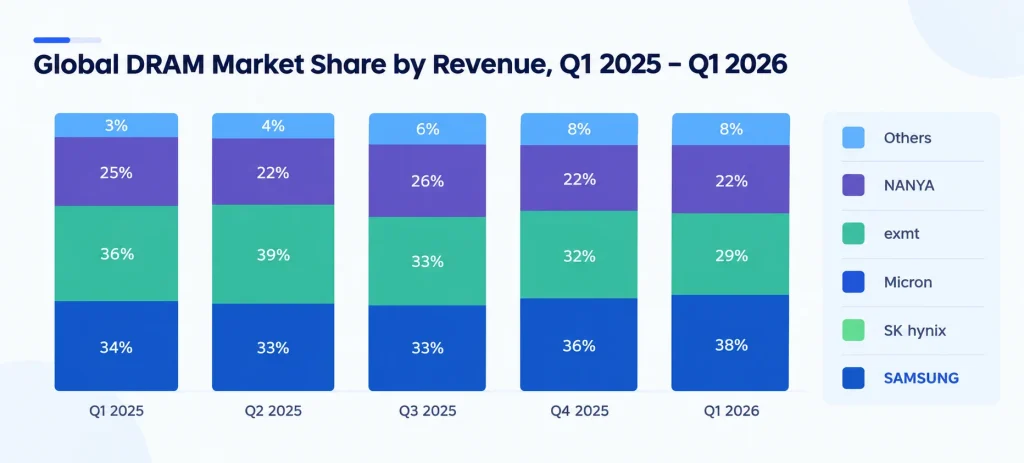
These three make more than 95% of the world’s DRAM, and all three have been converting standard RAM production lines into HBM lines. That’s not a small tweak. It’s a structural shift in what the world’s memory supply is even built for now.
3. Micron shut down its consumer brand entirely

Micron shut down Crucial, its consumer memory brand, completely, choosing to sell directly to AI companies instead. When one of the three companies making almost all the world’s RAM walks away from the consumer market on purpose, that’s not a temporary shortage. That’s a deliberate business decision.
Are memory makers holding back supply on purpose
Fair question. And a lot of them are asking for it. And here’s my personal opinion.
The precedent: 2022 and 2023
There’s a real argument that manufacturers are deliberately limiting supply to keep prices high, and it’s not baseless:
- In 2022 to 2023, memory went through a brutal downturn
- Too much supply met too little demand, prices crashed
- Samsung, SK Hynix, and Micron all lost money for several quarters straight
- Their response: cut production on purpose, specifically to avoid repeating it
| Sources: – Samsung to cut chip production as profit plunge by 96% – Micron revenue dropped by approx. $21B in 2020 – SK Hynix financial statements |
So the idea that they manage supply carefully isn’t a conspiracy theory. It’s their own stated history.
My take: more capacity won’t fix pricing fast
Even if manufacturers wanted to fix the shortage by building a lot more capacity right now, prices wouldn’t drop anytime soon.
Here’s why:
- A new fab takes 2 to 3 years to go from announcement to real volume, no matter how fast anyone wants to move
- Building flat out into an AI demand peak is a risky bet. If that demand cools or the wider AI investment cycle corrects before new capacity is ready, manufacturers are left holding an expensive factory built for demand that’s no longer there
- Even once new capacity does come online, whoever built it will want to run it at high margins for 2 to 3 years to recover the investment
So added supply doesn’t mean an immediate price crash. It more likely means prices stay elevated a while longer than the supply numbers alone suggest, simply because someone needs to earn back the capital first.
This is one of the more overlooked reasons we don’t expect a fast return to 2024-level RAM pricing, even once new capacity starts showing up.
DDR4 vs DDR5 vs DDR6, what’s actually different right now
| DDR4 | DDR5 | DDR6 | |
| Status today | Being phased out, prices rising on scarcity | Current mainstream standard | Still in development |
| Price trend | Up 170%+, sometimes pricier than DDR5 | Up 300-400% since late 2025 | Not commercially priced |
| Availability | Shrinking fast | Available, but expensive | Enterprise/server first, expected 2028-2029 |
| Best for | Businesses already on DDR4 infrastructure | New builds, most enterprise workloads today | Future AI and high-performance computing |
Is DDR6 actually coming soon
Not for most businesses. Here’s the realistic timeline:
- JEDEC is still finalising the DDR6 specification
- Server and enterprise versions expected first, around 2027 to 2028
- Mainstream consumer and business availability more realistically 2028 to 2029
- Earlier forecasts said 2027 across the board, but that slipped as spec work took longer
If you were hoping to skip the DDR5 spike by waiting for DDR6, that wait is longer than it sounds.
Is there a way out of this, and where China fit in
Whatever mix of caution and strategy is driving the big three, the result is the same: standard RAM stays scarce for a while. So who’s stepping in to fill the gap?
A Chinese chipmaker most people outside the industry have never heard of.
CXMT is closing the gap, but not the whole gap
CXMT (ChangXin Memory Technologies) is China’s largest DRAM manufacturer.
- Expected to run close to 350,000 wafers a month by end of 2026
- That puts it within striking distance of Micron’s own capacity
That sounds like good news, and in one sense it is. But here’s the catch: CXMT builds standard commodity DRAM, not HBM. It has no disclosed HBM manufacturing plan. So even at near-Micron scale, it doesn’t touch the actual reason Samsung, SK Hynix, and Micron pulled back from consumer RAM: the AI-driven pivot to HBM.
Analysts at Hanwha Securities put it plainly: even with CXMT’s expansion fully factored in, the global DRAM market stays undersupplied through 2027. CXMT makes the shortage less severe. It doesn’t end it.
Will RAM prices actually go down in India, and when
Let’s take a look at some possible trends.
| Timeline | What happens |
| H2 2026 | Prices plateau. They stop climbing, but don’t drop. |
| Late 2027 to 2028 | Real relief begins, as new fab capacity from Samsung, SK Hynix, and Chinese lines reaches the market |
| India specifically | Expect the wait to feel longer |
Why India feels it more: India imports the large majority of its RAM and semiconductor components. Global price increases hit Indian buyers directly, and currency movement adds another layer on top. When global prices rise 10%, Indian buyers often feel more than that once import costs and exchange rates are factored in.
Our honest read: this settles into a new normal, not a return to 2024 pricing. Even after 2027-2028 relief, most forecasts don’t expect RAM to go back to pre-AI-boom prices. It gets cheaper than today, not cheap like before.
What should Indian businesses do instead of just waiting it out
| If your workloads are… | Then… |
| Stable and predictable, already on DDR4 | Upgrading now can still make sense. You know your usage, and it’s a fair trade against a spiking market. |
| Variable, or scaling quickly | Buying physical RAM now locks in inflated prices for hardware you may need to change in a year or two. This is exactly the bet cloud infrastructure is built to avoid. |
With CloudPe, you scale RAM and compute up or down based on actual usage, without buying physical hardware at today’s inflated prices. You’re not stuck holding expensive DDR5 sticks if traffic drops next quarter, and you’re not underprepared if it spikes.
Check CloudPe for your VMs or GPU requirements.
Contact CloudPe
In a market where hardware keeps getting more expensive and less predictable, that flexibility is worth more than it was a year ago.
Frequently Asked Questions
Will RAM prices go down in India in 2026?
No. Most forecasts point to prices flattening out in the second half of 2026, not dropping. A real decline is more likely in late 2027 or 2028.
Why is DDR4 more expensive than DDR5 in some cases?
Manufacturers are shutting down DDR4 production lines faster than DDR5 lines, so DDR4 supply is shrinking quickly even though demand for it hasn’t disappeared. That scarcity pushes DDR4 prices up sharply, sometimes past DDR5.
When will DDR6 be available?
Enterprise and server versions are expected around 2027-2028. Broader consumer and business availability is more realistically 2028-2029.
What is CXMT, and will it fix the RAM shortage?
CXMT is China’s largest DRAM manufacturer, growing fast enough to nearly match Micron’s production capacity by the end of 2026. It eases the shortage, but it builds standard DRAM, not the HBM driving the crisis, so it doesn’t solve the underlying problem.
Why are there so many RAM brands if only three companies make the chips?
Brands like Kingston, Corsair, G.Skill, and ADATA don’t manufacture DRAM chips. They buy finished chips from Samsung, SK Hynix, or Micron, then test, package, and sell them under their own name. That’s why the shortage hit every brand at the same time.
Should I buy RAM now or wait?
If your infrastructure needs are stable and predictable, buying now can still make sense. If your usage changes often or you’re scaling, cloud infrastructure avoids locking you into today’s inflated hardware prices.