Choosing the right infrastructure partner determines how fast applications run and how predictable monthly bills remain.
This blog outlines the ten critical questions IT leaders and CFOs must ask every cloud service provider in India before committing to a contract.
1. How is cloud data protected against security breaches?
Data leaks and ransomware pose severe risks to companies, customers, and cloud providers. Storing data in a shared cloud requires isolated access controls so unauthorized groups cannot view sensitive files.
Top providers manage security across host, network, and physical layers. Essential security measures include:
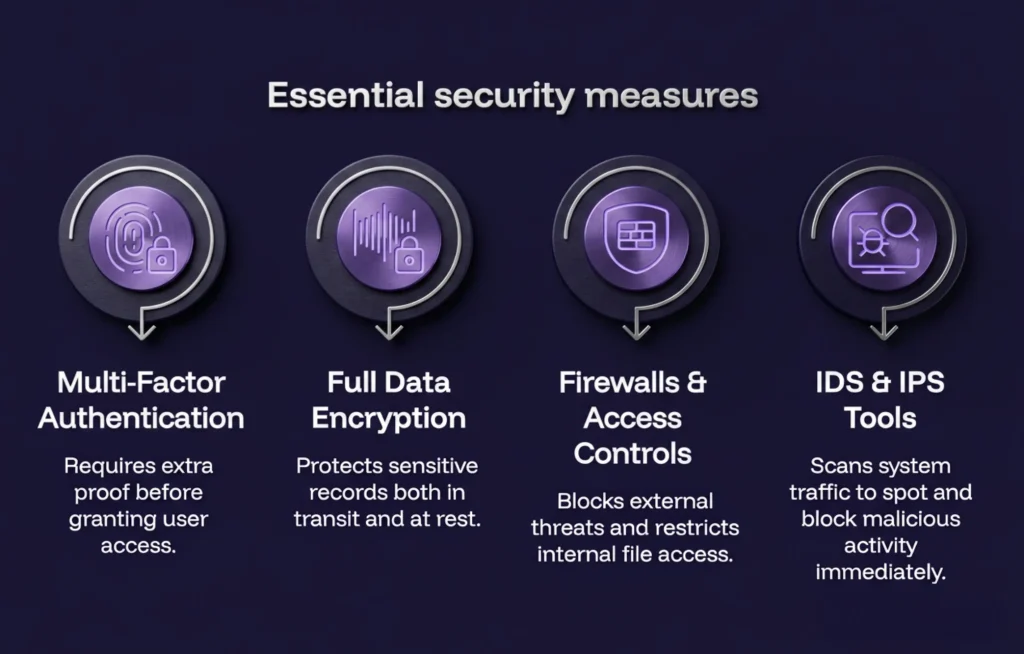
- Multi-Factor Authentication: Requires extra proof before granting user access.
- Full Data Encryption: Protects sensitive records both in transit and at rest.
- Advanced Firewalls & Access Controls: Blocks external threats and restricts internal file access.
- IDS & IPS Tools: Scans system traffic to spot and block malicious activity immediately.
2. Does the cloud server cost in India include bandwidth and egress fees?
Global vendors often attract customers with low compute prices but charge high fees when moving data out. A clear pricing model prevents unexpected charges on monthly invoices.
- Egress charges: Hidden bandwidth costs can increase monthly bills by 20% to 30%.
- Predictable billing: Indian businesses save significantly when bandwidth is flat-rated or bundled.
- Storage costs: Local SSD storage rates vary across Indian providers.
Evaluating total bandwidth expenses helps teams estimate the true cloud server cost in India before deployment.
Talk to an Expert About Zero Egress Fees
Talk with us3. How does the infrastructure comply with DPDP, RBI, and SEBI regulations?
Indian financial and enterprise regulations demand strict controls over data storage, access logs, and audit trails. Providers must offer verifiable proof of regulatory compliance to help institutions pass annual audits without friction.
- Digital Personal Data Protection (DPDP) Act: The DPDP Act 2023 mandates explicit consent, restricted cross-border transfers, and stringent data security controls for Indian citizens’ personal data.
- Reserve Bank of India (RBI) Directives: The RBI Data Localisation Guidelines require banks, payment gateways, and fintechs to store complete end-to-end transaction data exclusively within Indian boundaries.
- SEBI Cloud & Cybersecurity Frameworks: The SEBI Framework for Adoption of Cloud Services and the SEBI Cybersecurity and Cyber Resilience Framework (CSCRF) mandate that regulated entities enforce robust encryption, continuous Security Operations Center (SOC) monitoring, and MeitY-empanelled infrastructure.
4. What uptime guarantee does the service level agreement offer?
System downtime directly impacts revenue and customer trust. Service level agreements (SLAs) must state exact uptime percentages and financial credits for unscheduled outages.
An SLA offering 99.9% uptime permits up to 8 hours and 45 minutes of unscheduled downtime per year. Organizations should verify whether credits are applied automatically when outages occur.
5. Is this the cheapest cloud server in India without sacrificing performance?
Finding cheap cloud servers in India means balancing low prices with high performance. Low rates mean nothing if CPU speeds drop during traffic spikes or hidden bandwidth fees double your bill.
To find real value, compare the total cost to actual execution speeds. Big global providers often charge higher base rates plus extra fees for data transfers, IP addresses, and basic support. Local cloud providers remove currency markups and offer simple, flat-rate pricing.
6. What speed benchmarks can the cloud computing service provider demonstrate?
Server response times directly influence application performance and user retention. Independent performance tests reveal how hardware handles parallel requests.
Testing compute cores and disk access speeds ensures that a cloud computing service provider delivers expected results. Requesting live benchmark reports before signing prevents performance bottlenecks later.
7. How does the provider handle automated backups and disaster recovery?
Data loss can stop business operations instantly. A dependable backup policy must include automated snapshots and rapid restoration across distinct zones in India.
- Recovery Time Objective (RTO): How quickly systems come back online after a failure.
- Recovery Point Objective (RPO): The maximum age of files recovered from backup.
- Geographic Redundancy: Storing backup copies in separate Indian cities like Mumbai and Bengaluru.
8. What security controls protect against DDoS attacks and unauthorized access?
Cyber threats targeting Indian enterprises increase annually. Infrastructure partners must supply multi-layered defense mechanisms at the network and application levels.
According to CERT-In (Indian Computer Emergency Response Team), cyber incident reports in India are increasing year-over-year. Built-in firewalls, automated DDoS mitigation, and hardware-level encryption are essential standards for modern workloads.
9. Is 24/7 support provided by local engineers in India?
When systems go down, immediate access to qualified support engineers matters more than automated chatbots. Support teams based in India understand local business hours and urgency.
Having direct access to local experts eliminates long hold times and automated ticket queues. Local engineering teams can resolve critical infrastructure issues immediately without waiting for overseas escalation windows.
10. Can workloads scale instantly during high-traffic events?
Traffic spikes during festive sales or breaking news events require immediate resource scaling. Infrastructure must auto-scale CPU and RAM without forcing server reboots.
A reliable cloud service provider allows teams to scale resources up or down with zero downtime. Predictable auto-scaling prevents crashed checkout pages during peak demand periods.
Conclusion
Asking these ten questions helps organizations select an infrastructure partner that delivers high performance, legal compliance, and predictable costs. Choosing a reliable cloud service provider ensures long-term operational success for Indian enterprises.
Frequently Asked Questions
1. What is a cloud service provider?
A Cloud Service Provider (CSP) offers servers, storage, databases, and software over the internet. Businesses rent this infrastructure so they can operate without buying or managing physical hardware.
2. Why is it important to ask questions before choosing a cloud service provider?
Asking questions ensures the provider fits your specific business needs. It helps you verify security, confirm transparent pricing, and prevent major risks like downtime, data leaks, or hidden costs.
3. How much will a cloud service cost me?
Calculate total cost, including bandwidth, IP addresses, and support. Watch for unexpected spikes and hidden fees to avoid doubling the monthly bill.
4: How do I check the security of a cloud service provider?
Review their encryption methods and access controls. Ensure they have active firewalls and intrusion detection tools. Verify compliance with ISO 27001, SOC 2, and local data protection laws.
5. How can a business find the cheapest cloud server in India?
To find the cheapest cloud server, businesses should compare total costs including compute, storage, bandwidth, support fees, and evaluate price-to-performance benchmarks.