What is AI (Artificial Intelligence)
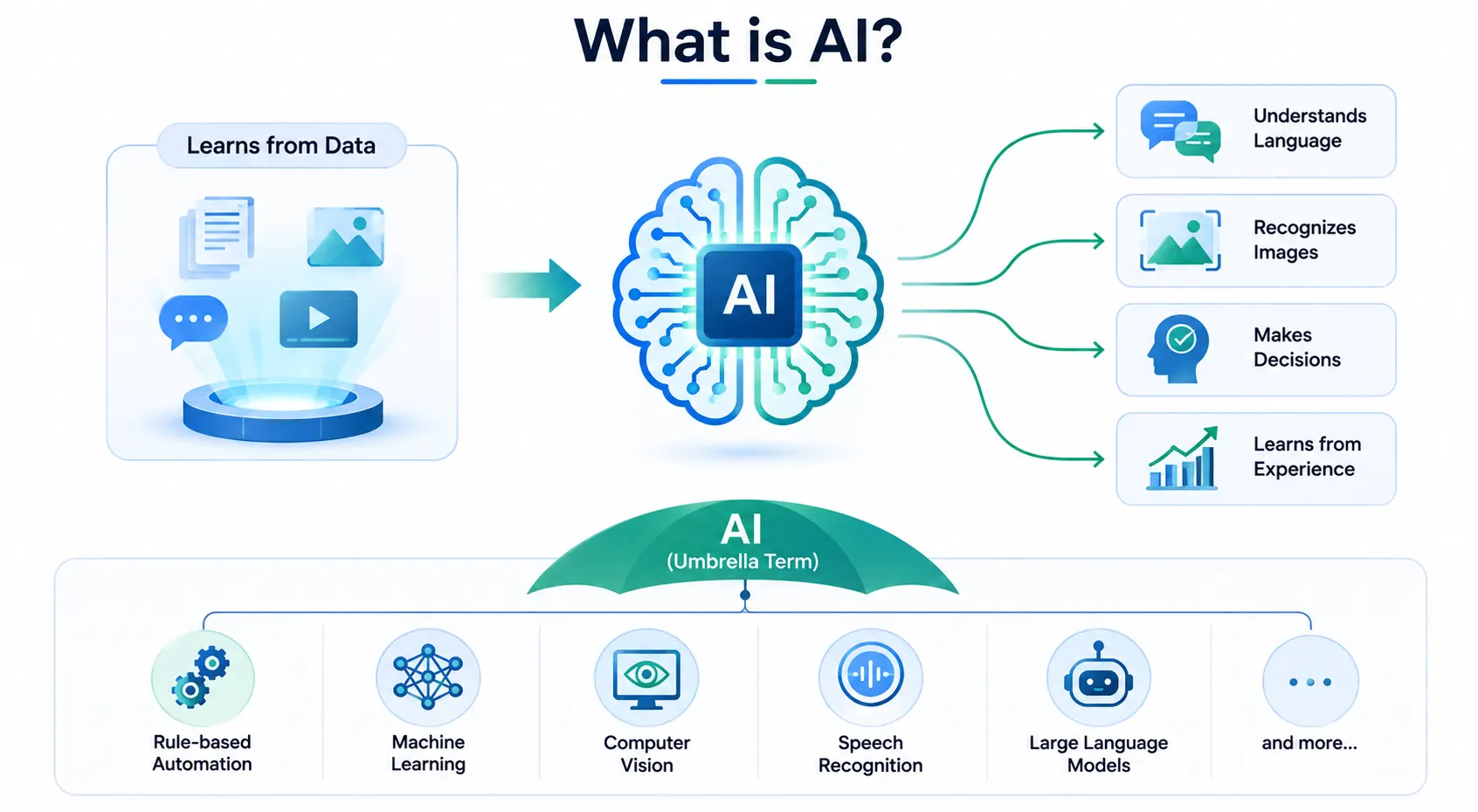
AI, or artificial intelligence, is technology that lets machines perform tasks that normally require human intelligence, things like understanding language, recognizing images, making decisions, and learning from data. Instead of following a fixed set of instructions for every situation, AI systems learn patterns from data and use them to handle new, unseen inputs.
AI isn’t one single technology. It’s an umbrella term covering everything from simple rule-based automation to the large language models behind tools like ChatGPT.
The 7 main types of AI
AI is usually broken into two ways of thinking about it:
- what it can do (capability),
- and how it functions (functionality).
Together, that gives seven commonly referenced types, mentioned below:
By capability:
- Narrow AI (ANI): Built to do one specific task well, like a spam filter, a voice assistant, or a recommendation engine. This is the only type of AI that actually exists today.
- General AI (AGI): A hypothetical AI that could match human intelligence across any task, not just one narrow domain. This doesn’t exist yet.
- Super AI (ASI): A theoretical AI that would exceed human intelligence entirely. Purely speculative at this point.
By functionality:
- Reactive machines: React to current input only, with no memory of the past. Early chess-playing AI is a classic example.
- Limited memory AI: Uses recent past data to inform decisions, like a self-driving car reacting to nearby vehicles. Most AI in use today, including LLMs, falls in this category.
- Theory of mind AI: A still-developing category aimed at understanding human emotions, beliefs, and intentions. Not fully realized yet.
- Self-aware AI: A hypothetical AI with consciousness and self-awareness. Firmly in science-fiction territory for now.
How AI Works?
Here’s the core idea, broken down simply:
1. The foundation is neural networks
Modern AI is built on neural networks. The layers of simple mathematical units (“neurons”) loosely inspired by the brain. Each connection between neurons has a “weight” that gets adjusted during training. No single neuron understands anything; intelligence emerges from millions or billions of these tiny weighted connections working together.
2. Training and learning from examples
During training, the model is shown massive amounts of data (text, images, etc.) and learns to predict patterns:
- For a language model, the core task is deceptively simple. Predict the next word in a sentence, over and over, across huge portions of the internet, books, and code.
- Every time the prediction is wrong, an algorithm called backpropagation nudges the weights slightly to make the correct answer more likely next time.
- Repeat this billions of times, and the network starts encoding grammar, facts, reasoning patterns, and even style.
3. Fine-tuning and alignment
After initial training, models go through additional stages:
- Fine-tuning on curated examples of good behavior
- Reinforcement learning from human feedback (RLHF), where humans rate responses, and the model is adjusted to produce more of what people find helpful, honest, and safe
4. Inference using the trained model
Once trained, “running” the AI (called inference) means feeding in your input (a prompt), and the model calculates token by token. The most probable next piece of text, using everything it learned during training. It’s not looking up answers in a database; it’s generating them fresh based on learned patterns.
Applications of AI
The following are AI applications:
- Customer support: Chatbots and virtual assistants that answer questions and resolve issues without a human agent.
- Content generation: Writing drafts, summarizing documents, and generating marketing copy.
- Fraud detection: Spotting unusual transaction patterns in banking and finance in real time.
- Recommendation systems: Suggesting products, shows, or content based on past behavior (Netflix, Amazon, and similar platforms run on this).
- Image and speech recognition: Powering everything from photo tagging to voice assistants like Siri and Alexa.
- Predictive maintenance: Flagging equipment likely to fail before it actually breaks down, common in manufacturing.
- Software development: AI coding assistants that help write, review, and debug code.
Role of AI in cloud computing
AI and cloud computing rely on each other heavily:
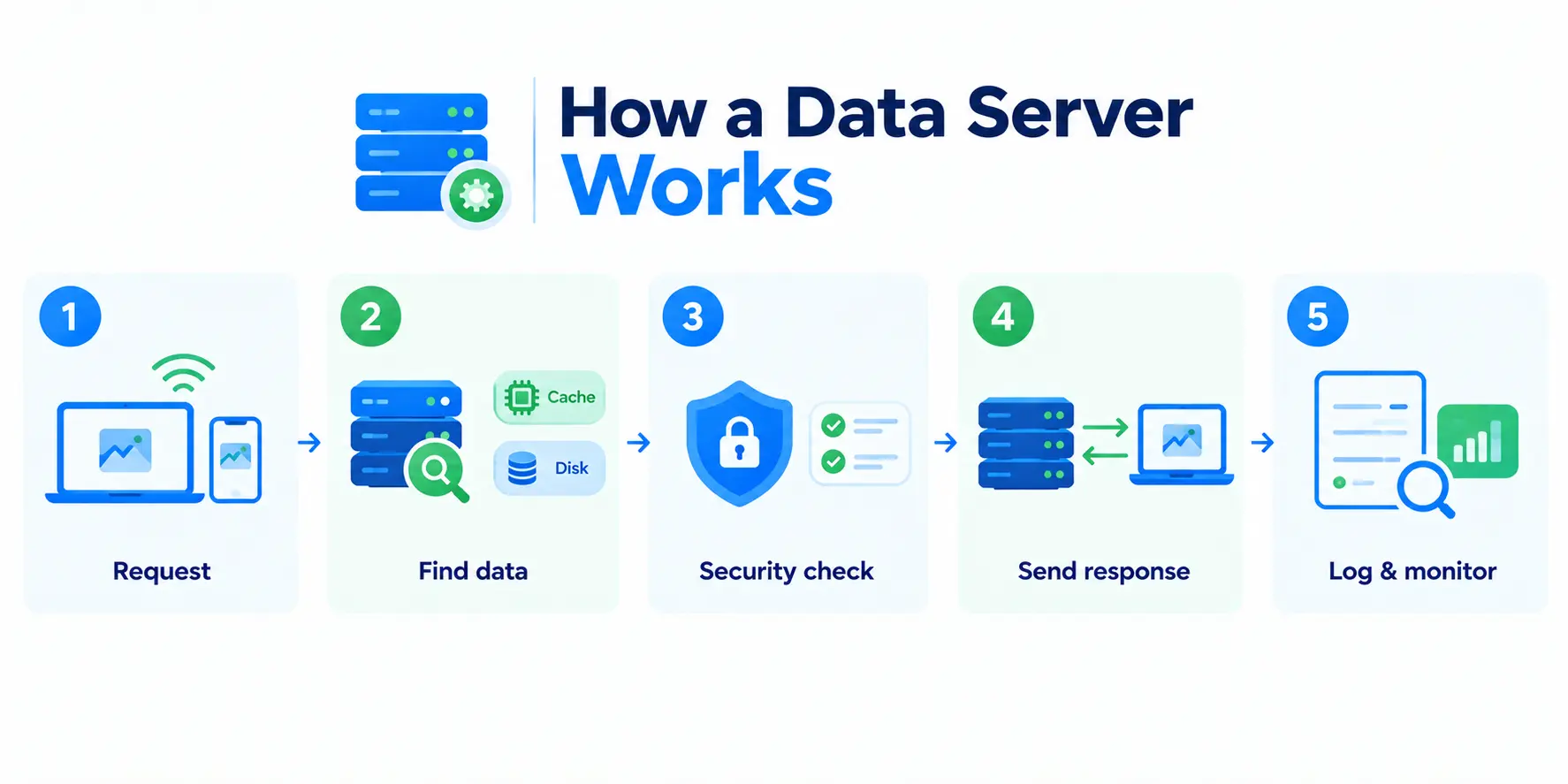
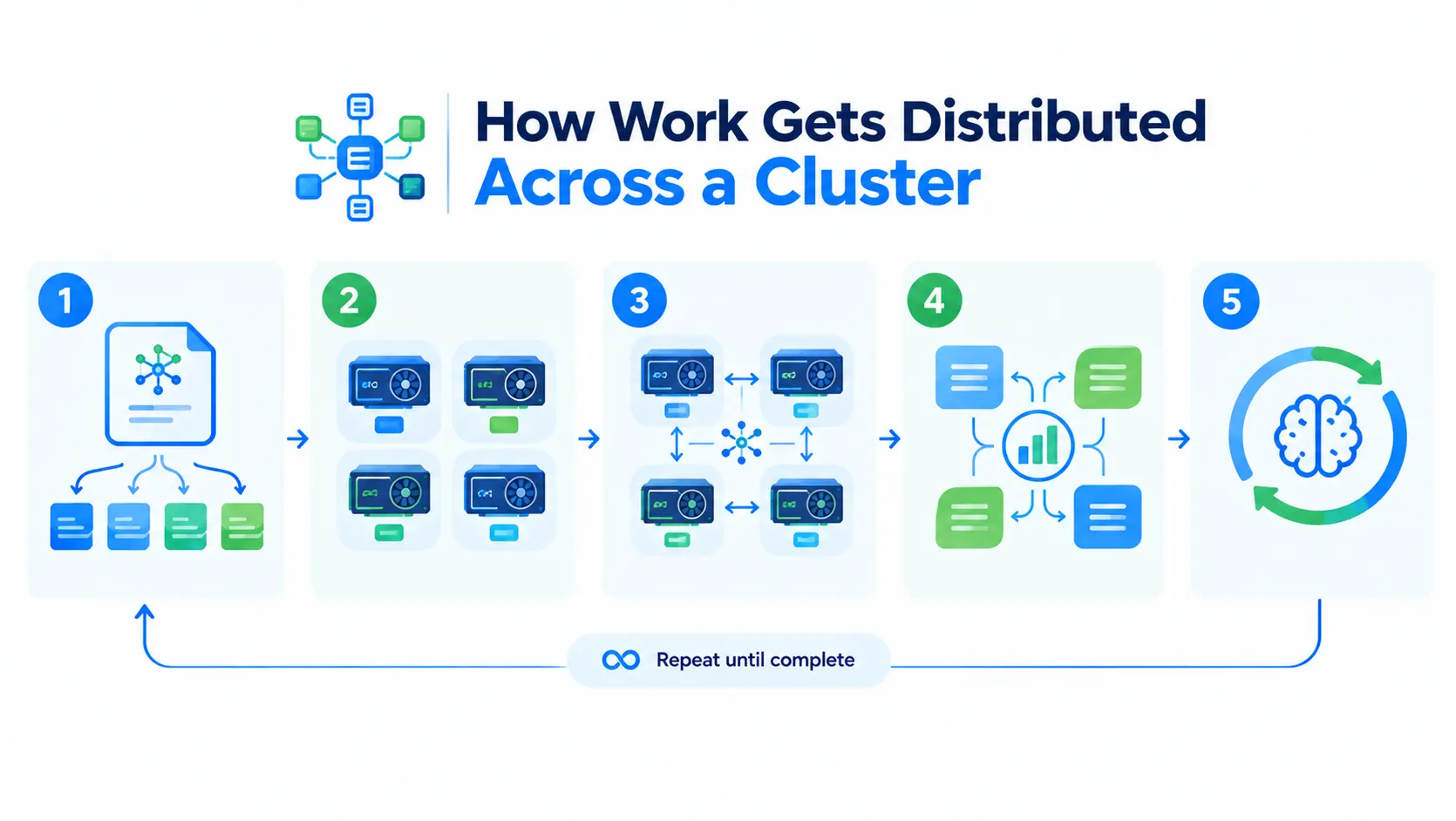
- Cloud provides the compute AI needs: Training and running AI models, especially large ones, requires GPU power most businesses don’t want to own and maintain themselves. Cloud GPU instances make that accessible on demand.
- AI improves how cloud infrastructure runs: Cloud providers use AI internally for things like predictive autoscaling, anomaly detection, and automated resource optimization across data centers.
- AI services delivered via the cloud: Instead of building models from scratch, businesses can access AI capabilities (like ready-made language models or vision APIs) as a cloud service, paying only for what they use.
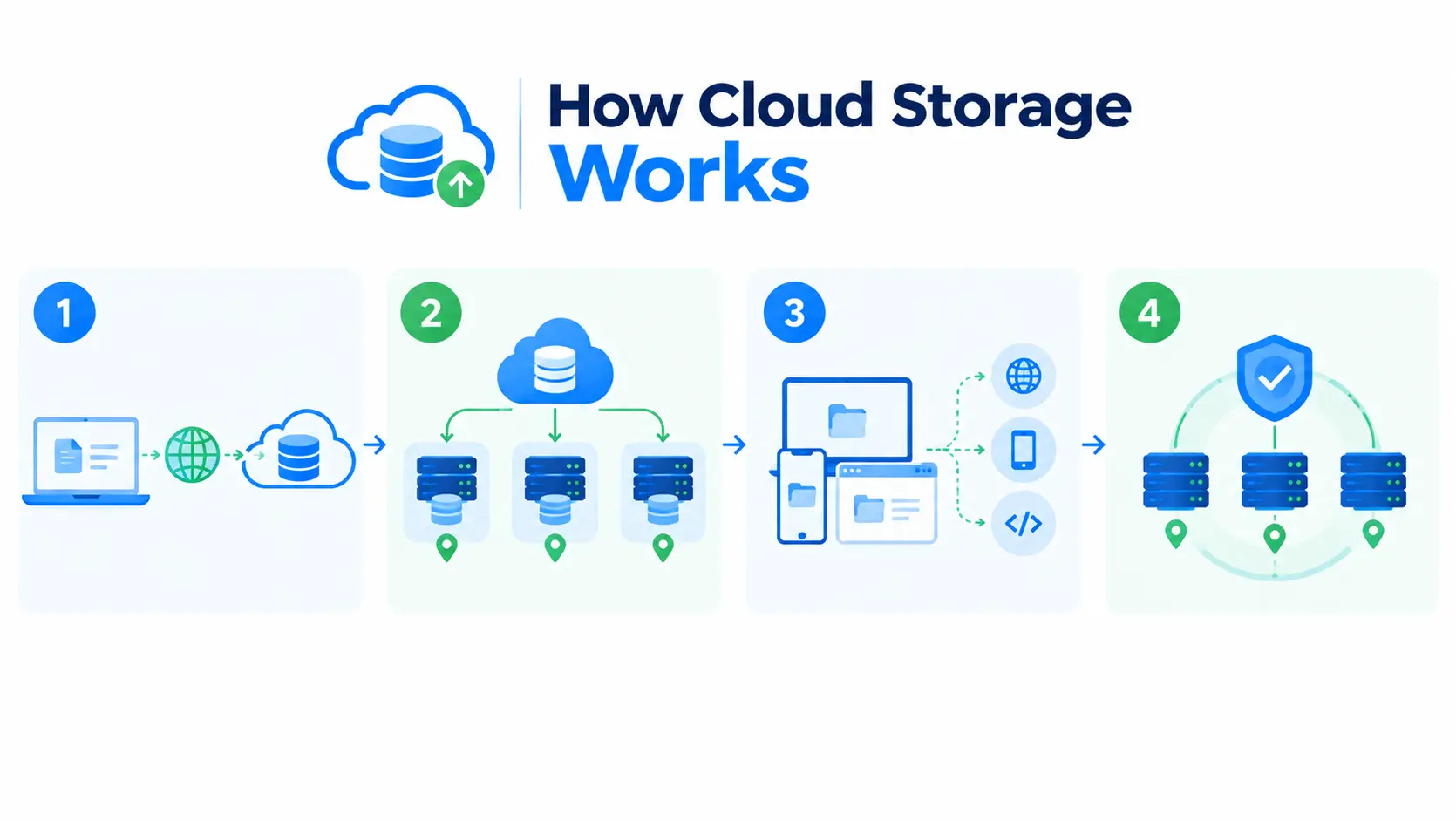
- Data storage and pipelines: AI models are only as good as the data they’re trained on. Cloud storage and data pipelines are what feed that data into training and inference systems at scale.
In short, most modern AI, especially anything involving large models, runs on cloud infrastructure.