What is cyber security?
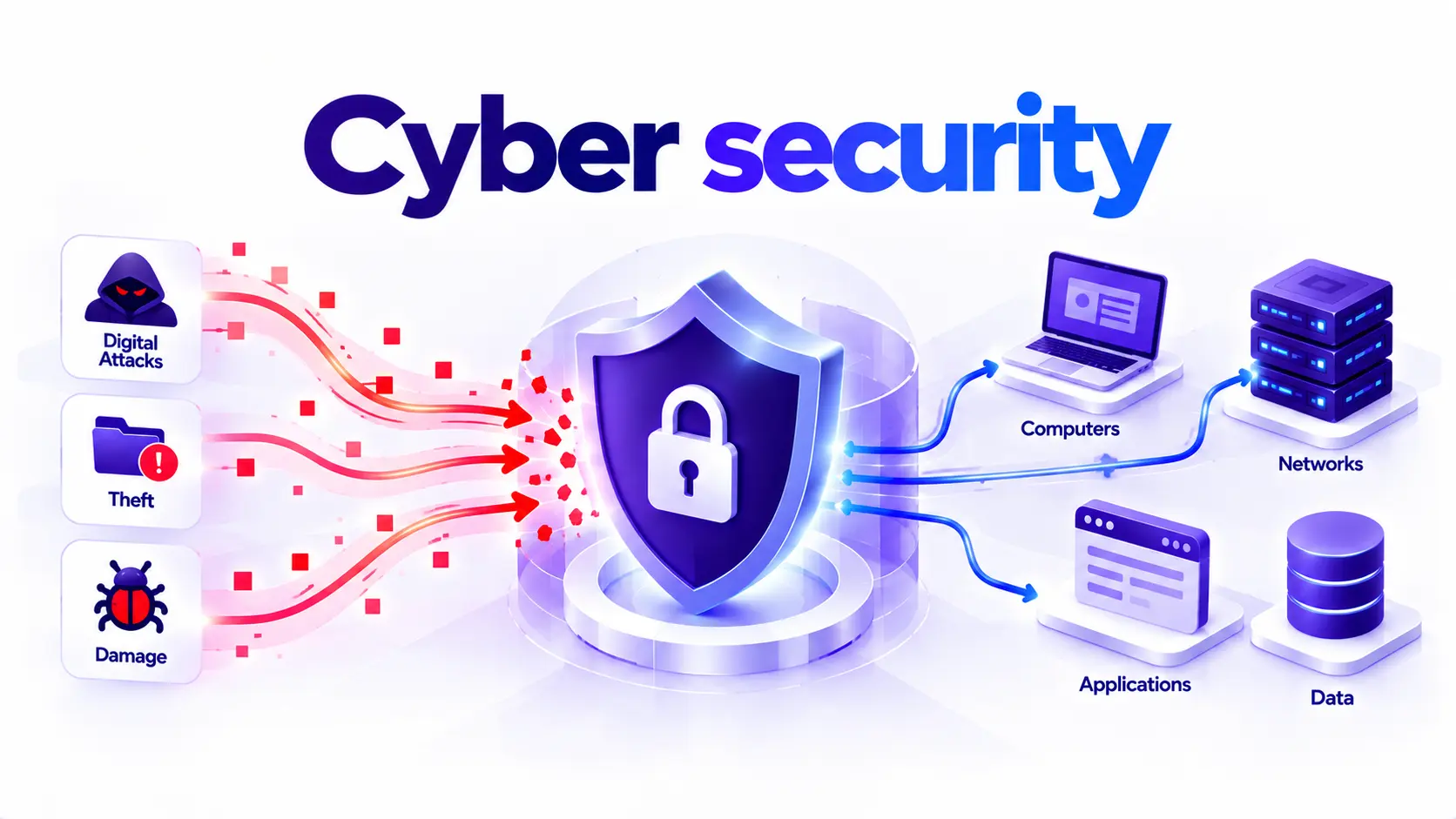
Cyber security is the practice of protecting computers, networks, applications, and data from digital attacks, theft, and damage. It covers everything from the password on your email account to the firewalls guarding a company’s servers.
The goal is simple: keep information private, accurate, and available to the people who are supposed to have it, and nobody else.
History of cyber security
Cyber security goes back further than most people expect.
A quick timeline
- 1971: Researcher Bob Thomas writes Creeper, widely considered the first program to move between computers on its own, decades before most businesses had a network to protect.
- 1988: The Morris worm exposes real weaknesses in how early systems handle passwords and software updates.
- 1989: The AIDS Trojan becomes the first recorded ransomware attack.
- 1990s: The World Wide Web opens the internet to the public. Viruses and worms spread at a much larger scale, and security shifts from an academic concern to a mainstream business problem.
- 2003: The US stands up its first dedicated cybersecurity agency.
- 2010s: Attacks like Stuxnet show that a cyberattack can damage physical infrastructure, not just steal data.
- 2010s–present: New regulation, from GDPR in Europe to the DPDP Act in India, pushes organizations to treat data protection as a legal requirement rather than a best practice.
The three goals of cyber security
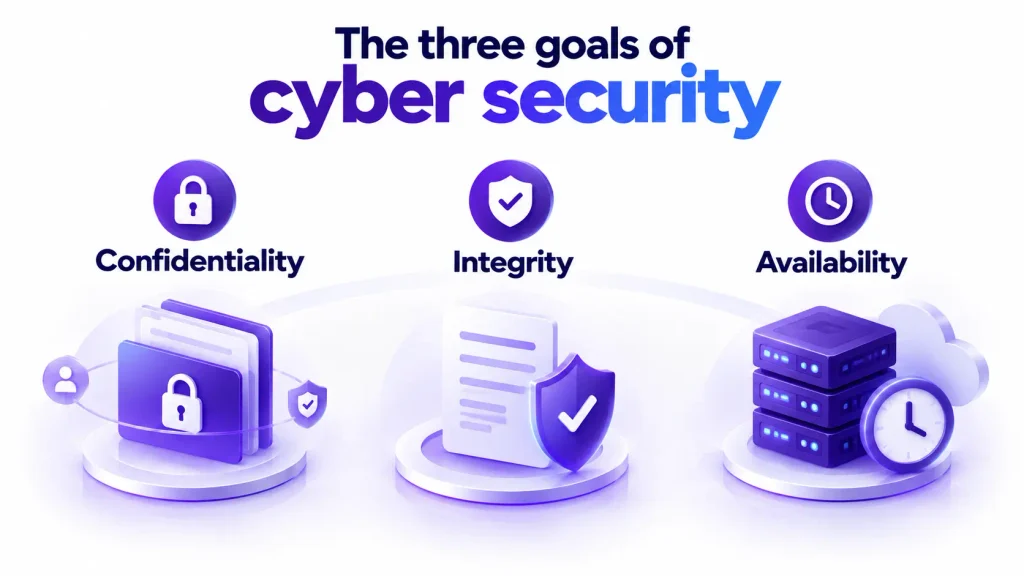
Most security work comes back to three principles, often called the CIA triad:
- Confidentiality: Only authorized people can see the data. Encryption and access controls support this.
- Integrity: Data stays accurate and can’t be changed without permission. Checksums and audit logs support this.
- Availability: Systems and data are accessible when needed. Backups and protection against attacks like DDoS support this.
Types of cyber security
The main categories of cyber security are:
- Network security: Protects the network itself using firewalls, intrusion detection, and traffic filtering.
- Application security: Builds protection into software through secure coding, testing, and regular updates.
- Cloud security: Protects data, workloads, and access in cloud environments.
- Endpoint security: Secures individual devices like laptops, phones, and servers.
- Data security: Protects the data itself, at rest and in transit, through encryption and access policies.
- Identity and access management (IAM): Controls who can log in and what they’re allowed to do.
Common cyber threats
Below are the cyber threats to watch for:
- Phishing: Fake emails or messages that trick people into sharing passwords or clicking harmful links. This is still the most common way attackers get in.
- Malware: Harmful software like viruses, spyware, and trojans.
- Ransomware: Malware that locks your data and demands payment to unlock it.
- DDoS attacks: Floods of traffic that knock a service offline.
- Insider threats: Employees or contractors who misuse their access, on purpose or by mistake.
- Misconfiguration: Settings left open by accident, like a storage bucket set to public. This causes a large share of cloud data leaks.
Why cyber security matters
A single breach can mean stolen customer data, downtime, legal penalties, and lost trust. For businesses in India, rules like the Digital Personal Data Protection (DPDP) Act also make protecting personal data a legal requirement, not just good practice.
Basic cybersecurity best practices
Where to start
- Use strong, unique passwords and a password manager.
- Turn on multi-factor authentication (MFA) everywhere it’s offered.
- Keep software and systems updated. Many attacks use flaws that already have a fix available.
- Back up your data regularly, and test that you can restore it.
- Limit access. Give people only the permissions they need to do their job.
- Train your team to spot phishing and suspicious requests.
- Encrypt sensitive data, both when stored and when sent over a network.
Cyber security in the cloud
In the cloud, security is shared. The provider protects the physical data center and core infrastructure. You are responsible for how you configure your servers, who has access, and how your data is handled. Knowing where that line sits is one of the most important parts of cloud security.