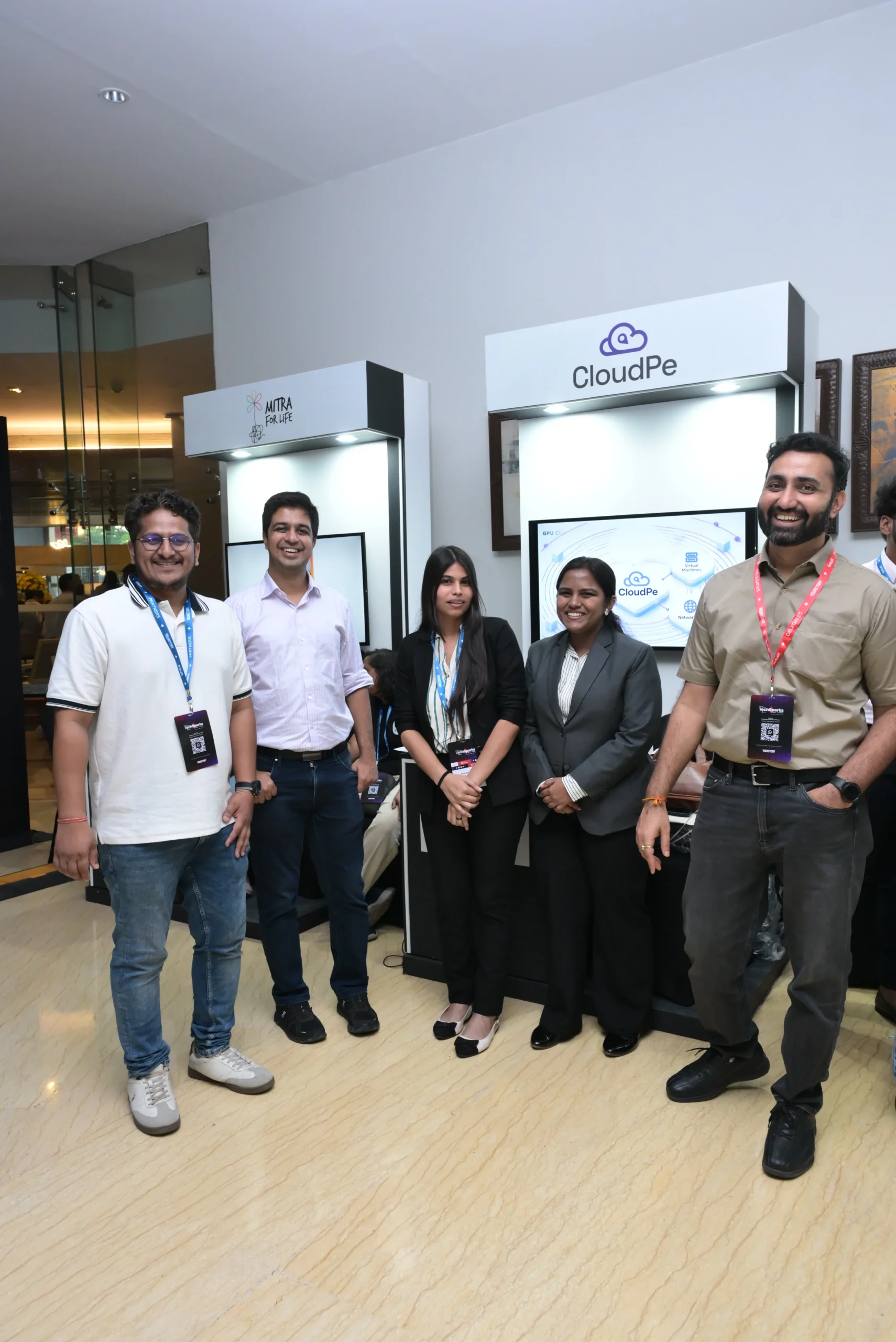
CloudPe took part in TechSparks 2026, YourStory’s 17th summit, held from 13 to 15 October at Taj Yeshwantpur, Bengaluru. At Pod 02, our team met a lot of people, and the venue had more than 50 booths.
The conversations kept returning to the same questions: what does GPU cost, and can it be relied on to run AI-driven products in the cloud?
What was TechSparks 2026 about?
The summit’s theme was “The New Tech Order”, and its program was built around AI in growing startups. The organizers laid out three days: The Shift, on compute, chips and sovereignty, The Builder, on taking AI from prototype to production, and The Impact, on jobs, education and healthcare.
YourStory said the event would bring together more than 10,000 attendees, 500 speakers and 300 investors. It is also where YourStory unveils Tech30, its annual selection of 30 early-stage startups.
What did startups ask us about?
Most visitors were startups, many of them in IT services. We talked through their current infrastructure and the challenges they face, and four topics came up most:
- Pricing: Most visitors focused on our pricing.
- GPUs: Teams exploring AI-driven applications wanted to know where GPU infrastructure fits.
- Security and compliance: These came up alongside cost, not after it.
- A reliable cloud: Teams asked what dependable infrastructure looks like for production workloads.
What did we hear on stage?
Two points from Day 1 matched what we heard at the pod. Shivaarti Bajaj of RSD Bajaj Global Law Firm said that compliance with India’s DPDP framework, including consent, data mapping, and breach readiness, can influence how investors value companies. She urged founders to build privacy in from the start.
On infrastructure spending, Zoho’s Sridhar Vembu argued that India should put foundational technology ahead of heavy government spending on GPUs: “There’s no point spending $10 billion on GPUs right now.” His point was about national priorities. For most startups, the practical question is smaller: how much GPU capacity to use, for how long, and at what cost.
Our take
On compliance, the calendar favors early movers. India’s DPDP Rules were notified in November 2025, with most obligations starting on 13 May 2027, so a startup building today will ship into that regime. We think the cheap choices come first: pick an India region, keep logs and backups in the country, and know where customer data sits. They cost little on day one and a lot to retrofit.
On GPUs, we agree with the principle behind Vembu’s point: owning foundational technology matters more than owning hardware. Renting capacity is how a startup keeps its money for the product, and hourly billing means paying only for the hours a model is actually tested.
The risk is not renting. It is renting more than the model needs.
We think the order should be:
- size the GPU to the model first,
- then pick the billing plan.
Hourly suits the stage when demand is unclear, and monthly or annual plans suit it once demand is steady.
What does this mean for startups planning AI infrastructure?
Three takeaways stood out from our conversations:
- AI is becoming central to startup growth. Teams are weighing where it fits in their products and operations.
- GPU infrastructure matters for AI-driven applications. Fit depends on the workload, so sizing the GPU to the model is a good first step.
- Security and compliance belong in the plan from day one. They are easier to build in early than to add later.
What comes next?
The event gave CloudPe direct access to startup teams, many of them in IT services. The focus now shifts to turning those conversations into active projects. That means personalized follow-ups for every team that asked for details, mapping the other people involved in infrastructure, cloud and data or AI decisions at each company, and sharing information that fits its current cloud setup and requirements.
Current GPU and cloud rates are on our pricing page.
About TechSparks
TechSparks is YourStory’s flagship startup and technology summit, now in its 17th edition. It brings together founders, investors, policymakers and technologists, with keynotes, panels, workshops, product demos and the Tech30 launch.