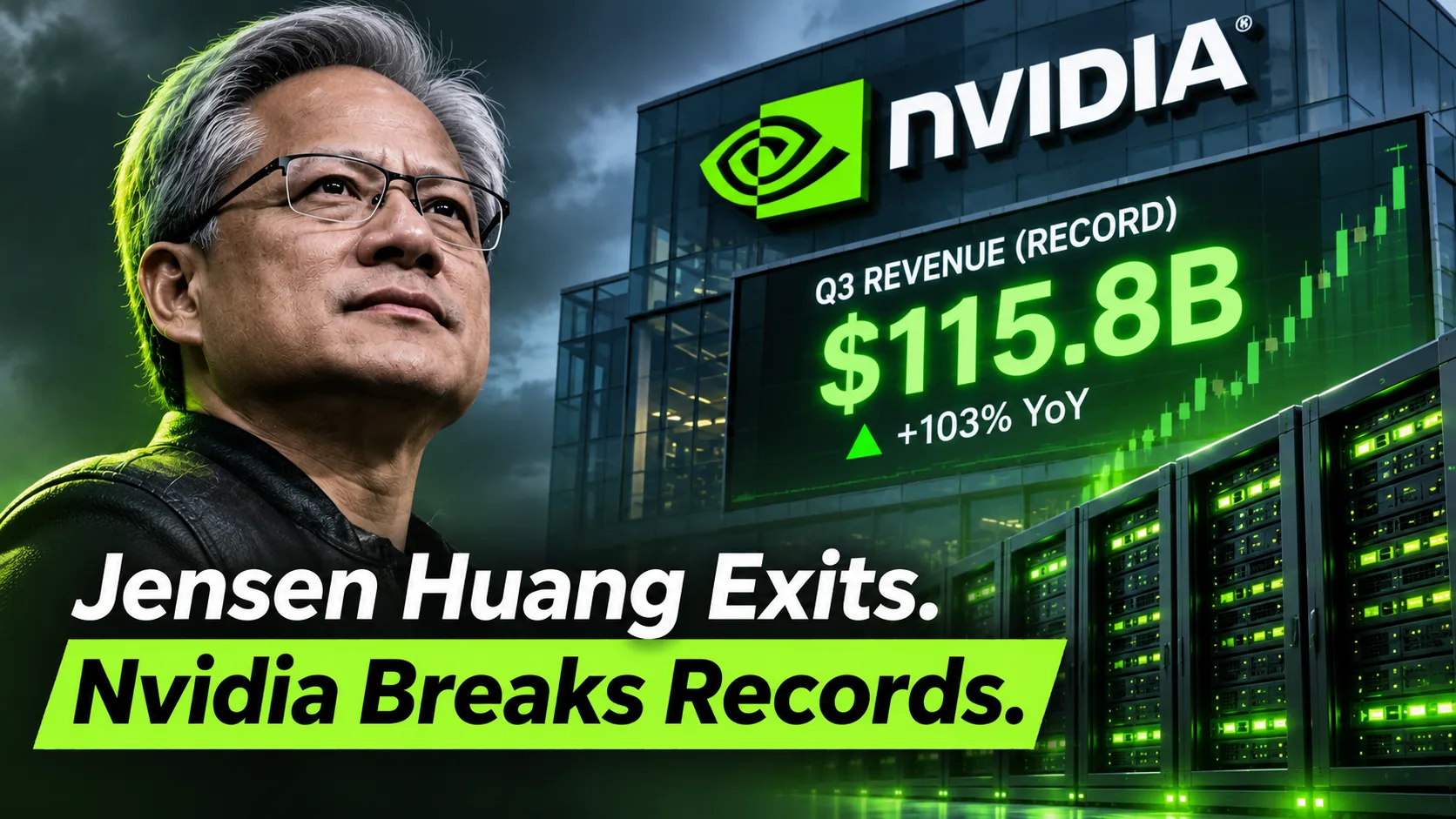
Nvidia reported record third-quarter revenue of $115.8 billion on 17 November, its first results since Jensen Huang resigned as CEO on 12 November. Revenue rose 103% from a year earlier, and Data Center revenue reached $107.6 billion.
The leadership change has not dented demand so far. The caveat sits in the financing. Nvidia’s commitments to neoclouds, about $32 billion, take effect only if those providers secure their own financing, and its outlook factors in customers’ access to capital.
What happened at Nvidia?
The sequence ran over ten days. These are the main points, with their sources:
- 8 November: the board announced an independent investigation into reports that Huang was targeted by a foreign intelligence operation. It said it had no reason to believe national security or company secrets were compromised.
- 12 November: Nvidia announced that Huang had resigned as president, CEO and director, effective immediately. CFO Colette Kress became interim CEO, and Harvey C. Jones became the first-ever board chair. The filing gives no reason, and the stock fell 4%.
- 17 November: on the earnings call, Jones said Huang voluntarily resigned after disclosing personal behavior that broke the company’s code of conduct, and that the board does not intend to reinstate him.
Outlets including The Washington Post and Al Jazeera tied the resignation to reports of relationships, including with a woman suspected of being a Chinese spy. The US Department of Justice has said it has not determined whether such a relationship existed. The investigation is ongoing.
How did the results hold up?
The quarter beat expectations, and the guidance is higher. Nvidia reported these figures:
- Revenue: $115.8 billion, up 20% from the previous quarter
- Data Center revenue: $107.6 billion, up 110% from a year earlier
- Next quarter: $130 billion, plus or minus 3%, with no Data Center compute revenue from China assumed
- Product: Vera Rubin NVL72 systems have shipped
Kress also raised the fiscal 2028 growth outlook to about 75%, from 70%. She said the forecast considers data center readiness, the durability of customer demand and customers’ access to capital.
Why does financing matter now?
Nvidia’s own filing says that many neoclouds and frontier labs are growing faster than their balance sheets and credit profiles can support, and that it has arranged support for select customers.
The terms are conditional. Nvidia’s commitments take effect only if the neocloud secures financing and the capacity is deployed, operational and accepted by Nvidia. Nvidia earns revenue on the upfront sale and, if criteria are met, shares in the neocloud’s rental revenue.
Kress told analysts Nvidia would be “disciplined and selective” about neocloud financing, and that funding is the neocloud’s job. The Wall Street Journal reported in October that Huang had told cloud executives that their customers would need to pay up front. Nvidia’s supply and capacity commitments rose to $390 billion.
What does it mean for teams buying GPU capacity?
Demand for GPUs is strong, and supply still depends on money. Three questions follow for any team buying from a GPU cloud:
- Provider financing: whether the provider has secured the funding to deploy the capacity it is selling
- Delivery terms: what the contract says if capacity arrives late or in part
- Payment terms: whether the provider needs prepayment, and what happens to it if capacity is delayed
These are questions for the buyer, not conclusions about any provider. Nvidia’s filing describes conditions on its own commitments, not the financial health of particular neoclouds.
A separate US rule adds export-control scrutiny. Commerce’s interim rule on remote access, due to be published on 19 November, requires a license to export advanced chips to data centers that provide large amounts of compute to companies headquartered in China and certain other jurisdictions.
Providers and buyers should take their own legal advice on how it applies to them.
What to watch next
Four developments will show how far the caveat matters:
- The CEO search. The board is considering internal and external candidates
- The investigation. Its findings, and any congressional hearings
- Neocloud financing. Whether providers secure funding on the schedule Nvidia’s commitments assume
- Next quarter’s results. Whether the $130 billion guidance holds without China Data Center revenue
For now, the numbers show demand intact and a leadership change absorbed. The open question is whether customers can pay for the capacity they want.