Revolut says it cut its AI coding inference costs to about one-tenth of its earlier spending on Anthropic and OpenAI by self-hosting an open-weight model. Its AI operations lead, David Abitbol, described the move at the AI Engineer conference in New York on 13 October, and reports on it spread in the weeks after.
The figure is the company’s own, and it depends on scale. Revolut runs the model on 56 NVIDIA B200 GPUs for about 2,000 engineers, so the result shows when self-hosting can pay off, not that it always does.
What did Revolut say?
Revolut’s account covers the model, the hardware and the results. Here are the main points, as reported:
- The model: Revolut self-hosts GLM from the Chinese lab Z.ai. It began with GLM-5.1 in April 2026 and now serves GLM-5.3, according to The Register.
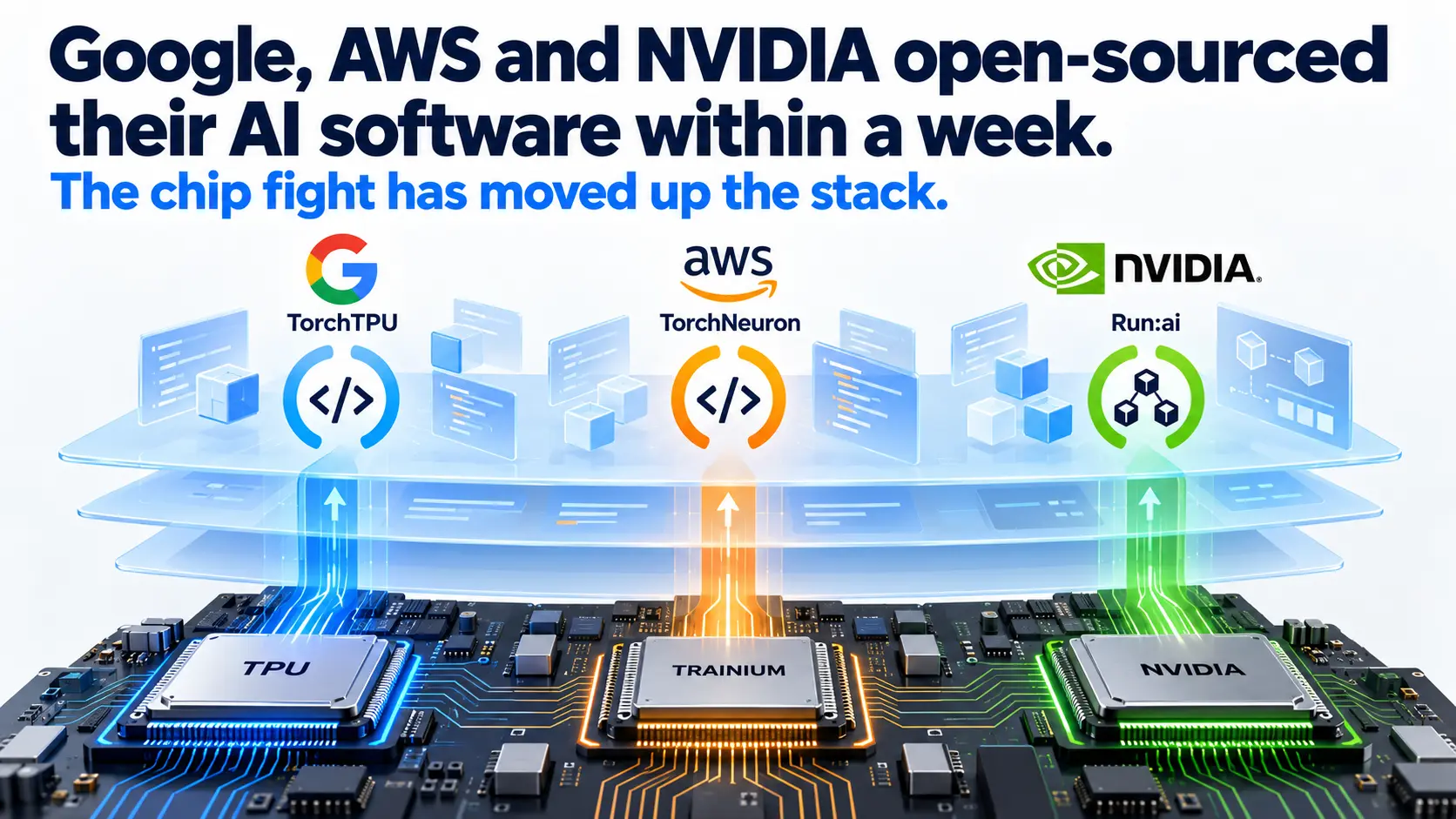
- The hardware: 56 NVIDIA B200 GPUs serve about 2,000 engineers, equal to seven eight-GPU DGX B200 systems.
- The cost: Abitbol said the blended cost is 30 cents per million tokens, and that the bill is one-tenth of what Revolut spent on Anthropic and OpenAI.
- The results: Revolut reports 70% better engineering lead time and 60% better coding time on a sample of 2,000 engineers.
- The setting: The open model is the default, and Claude Code, Codex and Gemini remain for specialised work.
What does the 90% leave out?
The reports do not say what the 30 cents includes. In particular, they do not say whether it counts the cost of buying or leasing the GPUs, power, networking and the engineers who run them.
One outlet puts the hardware in context. A fully configured eight-GPU B200 server has been listed at about $390,700 by one systems integrator, so seven servers come to roughly $2.7 million before power and staff. That is an outside estimate, not a Revolut figure.
Three other conditions apply:
- Scale: the setup serves about 2,000 engineers on 56 GPUs, which is a large commitment
- Load shaping: the figures assume steady tuning and a company that can set sandbox rules and work hours to shape demand
- Self-reporting: the productivity gains are Revolut’s own, and they may partly reflect removing usage limits, not only the model
What did self-hosting change besides cost?
The second half of the story is about how Revolut ran the workload. Out of the box, serving the open model performed poorly, with time to first token above 10 seconds. After tuning, it fell to about 1.6 seconds, and requests per second rose from about 3 to more than 7, an 88% gain while demand grew 76%.
Revolut also manages load by time of day. Interactive workloads run at around 200 tokens per second, and engineers can reach up to 800 tokens per second after 5 pm, when GPU demand is lower.
The company changed how engineers use AI as well. After some engineers were spending $1,000 to $10,000 a month, Revolut imposed strict budgets. A flat bill let engineers apply AI to tickets, documentation and email.
Lead time improved 70% against 60% for coding time, and Abitbol said the bottleneck for engineering is not necessarily coding.
The model has limits. GLM is text-only, so a router sends vision queries to other models while code generation stays on GLM.
Is this a wider pattern?
One company is not a trend, but a second example exists in India. Juspay says it runs about 95% of its AI-assisted coding on open-source models on infrastructure it controls.
It estimates that renting an 8-node GPU cluster costs ₹25 lakh to ₹35 lakh a month, against several times that if the same work were bought as tokens.
Governance is part of the picture. AIM reports that Revolut downloads the model weights and runs inference on US-based infrastructure, not on Chinese-hosted endpoints. Only AIM carries that detail, so it needs the original talk to confirm.
What to watch next
The economics turn on a few variables, and the next disclosures will show which matter most:
- The cost basis: Whether Revolut or others publish what the per-token figure includes
- Utilisation: How much of each GPU’s day is used, since an idle GPU costs the same as a busy one
- Independent replication: Whether other companies report similar savings at smaller scale
- Model quality: Whether open-weight models keep pace with frontier tools for the tasks that remain with them
A simple test applies to any team weighing the choice. Divide a setup’s total cost by the tokens it serves, then compare that with the metered price at the utilisation the team can actually sustain.