What is a CDN?
A CDN, or content delivery network, is a group of servers spread across many geographic locations that deliver web content, like web pages, images, video, and scripts, from a server close to the user rather than from one central location. The result is faster loading, less strain on the original server, and a more reliable experience when traffic spikes.
How a CDN works
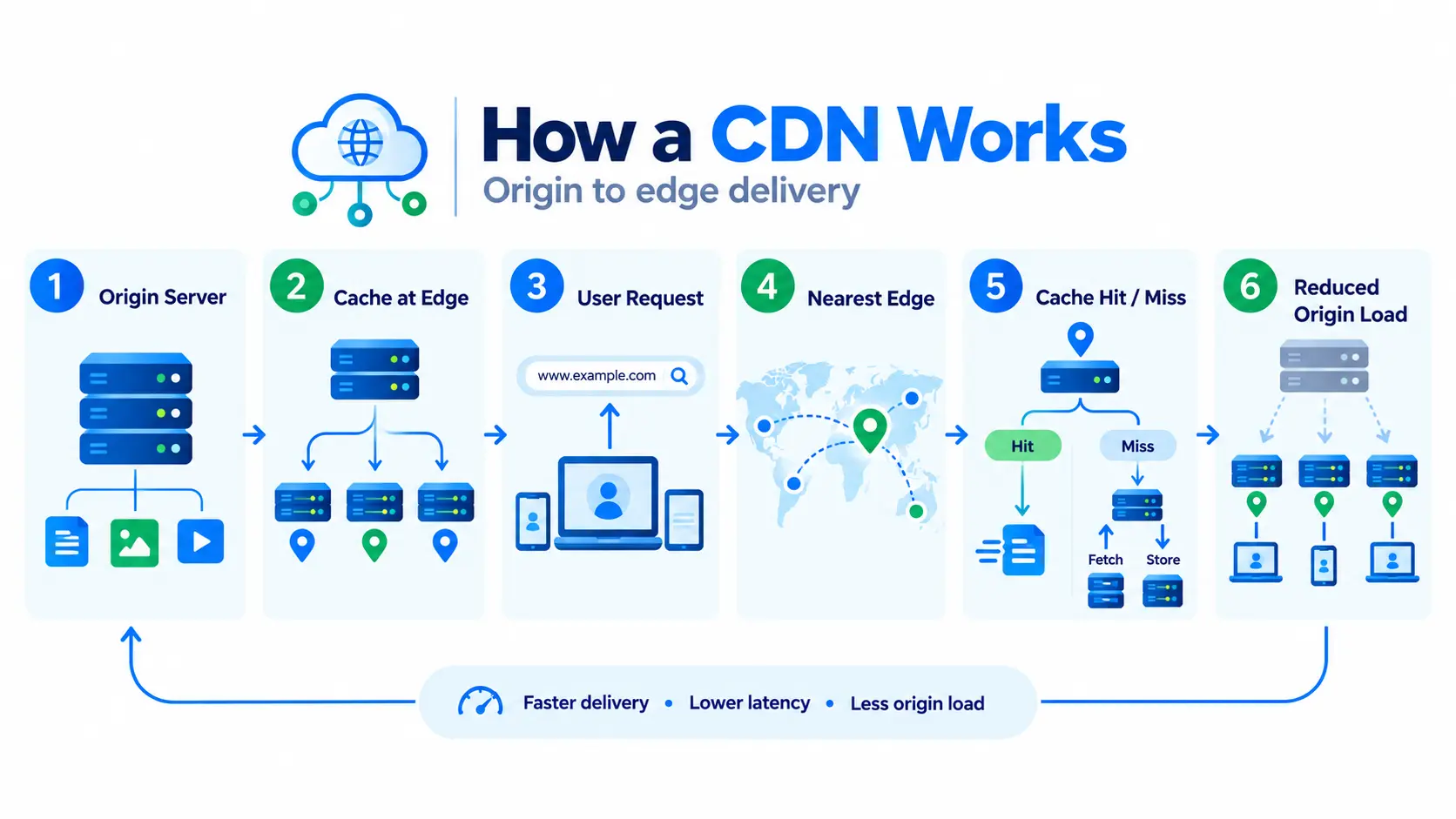
Below are the pointers on how a CDN works:
- The original version of your content lives on an origin server, which acts as the source of truth.
- The CDN copies, or caches, that content onto edge servers located in many regions around the world.
- When a user requests content, the CDN routes the request to the edge server closest to them.
- If the edge server already has the content cached, it delivers it immediately.
- If it doesn’t, it fetches the content from the origin server, delivers it, and stores a copy for the next request.
- Because most requests are handled at the edge, the origin server sees far less traffic.
Where CDNs came from
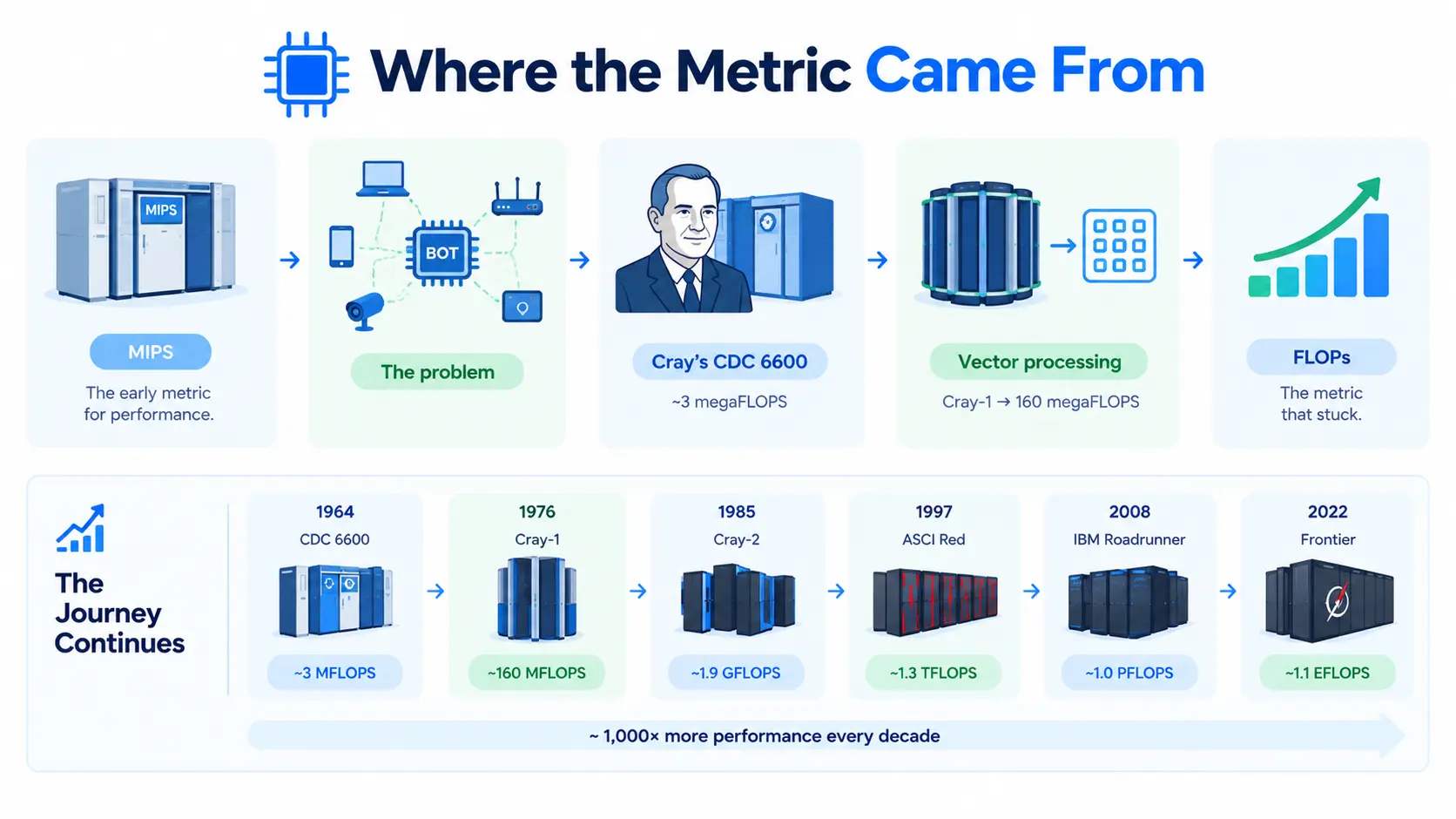
The following is the roadmap of where CDNs came from:
- Mid-1990s, the “flash crowd” problem: As the commercial internet grew, websites started crashing under sudden surges of visitors, more people arriving at once than a single server could handle. This phenomenon got its own nickname: a flash crowd.
- 1998, a challenge from the inventor of the web: At MIT, Tim Berners-Lee, who invented the World Wide Web, posed a challenge to find a better way to distribute content so the web wouldn’t keep jamming up. A group of MIT researchers, including Dr. Tom Leighton, responded with algorithms to intelligently route and replicate content across distributed servers. That research became Akamai, the first commercial CDN.
- Early 2000s, competition and standardization: Other providers like Limelight Networks, CacheFly, CDNetworks, and later Cloudflare entered the market, and large ISPs began building CDN capabilities of their own.
- Today: A large share of all internet content is delivered through a CDN, and most CDNs now also handle security, analytics, and protection against DDoS attacks alongside content delivery
| Trivia: At the end of 1999, Akamai ran about 3,000 servers worldwide and brought in roughly $4 million a year. By 2016, it managed more than 200,000 servers and earned over $2.3 billion in revenue. |
Key components of a CDN
Below are the key components of a CDN:
- Origin server: where the original, authoritative copy of the content lives. Updates are made here.
- Edge servers/points of presence (PoPs): servers positioned in many regions that hold cached copies of content and serve it to nearby users.
- Caching logic: the rules that decide what content gets stored at the edge, for how long, and when it should be refreshed from the origin.
- Routing: the system that directs each user’s request to the best-performing nearby edge server.
CDN vs regular web hosting
The table below shows the specifics of CDN vs regular web hosting:
| CDN | Regular web hosting | |
| Where content is served from | Many edge servers around the world | One server in a single location |
| Speed for distant users | Fast, content comes from a nearby server | Slower, every request travels to the origin |
| Handling traffic spikes | Load is spread across the network | A single server can become overwhelmed |
| Role | Distributes and caches content | Stores and runs the website itself |
| Used together? | Yes, a CDN sits in front of your hosting | Yes, hosting is still required as the origin |
Common use cases
The following are the common use cases of CDN Service:
- Website acceleration: loading pages faster for visitors regardless of their location.
- Video streaming: delivering video smoothly to large audiences without buffering.
- Software and game downloads: distributing large files to many users at once.
- DDoS protection: absorbing malicious traffic across the network before it reaches the origin.
- Image optimization: serving appropriately sized and compressed images to different devices.