Unlike traditional hacking, where an attacker breaks into a vault to steal data, a DDoS (Distributed Denial-of-Service) attack doesn’t care about stealing files. The sole purpose of DDoS is sabotage. By forcing a target offline by flooding it with millions of fake requests at once.
Instead of using supercomputers, attackers hijack vulnerable consumer electronics worldwide to create a hidden “zombie army.” When triggered, millions of everyday devices silently swarm a single website, clogging its entryways until legitimate users can’t get through.
What is a DDoS attack?
A DDoS (Distributed Denial-of-Service) attack floods a server, application, or network with a massive volume of traffic from many different sources at once. Until it can’t keep up and goes offline for legitimate users. The goal isn’t to steal data. It’s to overwhelm a system so badly that it stops working.
The “distributed” part is what makes DDoS attacks hard to stop. Traffic doesn’t come from one obvious source you can just block. It comes from thousands, sometimes millions, of devices at once, often without their owners even knowing.
How a DDoS Attack Works
- Most DDoS attacks rely on a botnet, a network of compromised devices (computers, routers, IoT devices) infected with malware and controlled remotely, without their owners’ knowledge.
- When an attacker triggers the botnet, every infected device sends traffic to the same target simultaneously.
- To the target server, this looks like a sudden, massive surge of real-looking requests not one attacker, but thousands acting at once.
- Because the traffic comes from so many different, legitimate-looking sources, simply blocking one IP address does nothing.
- This is the core difference from a basic DoS (Denial-of-Service) attack, which comes from a single source and is far easier to block.
Main types of DDoS attacks
The following are the main types of DDoS attacks:
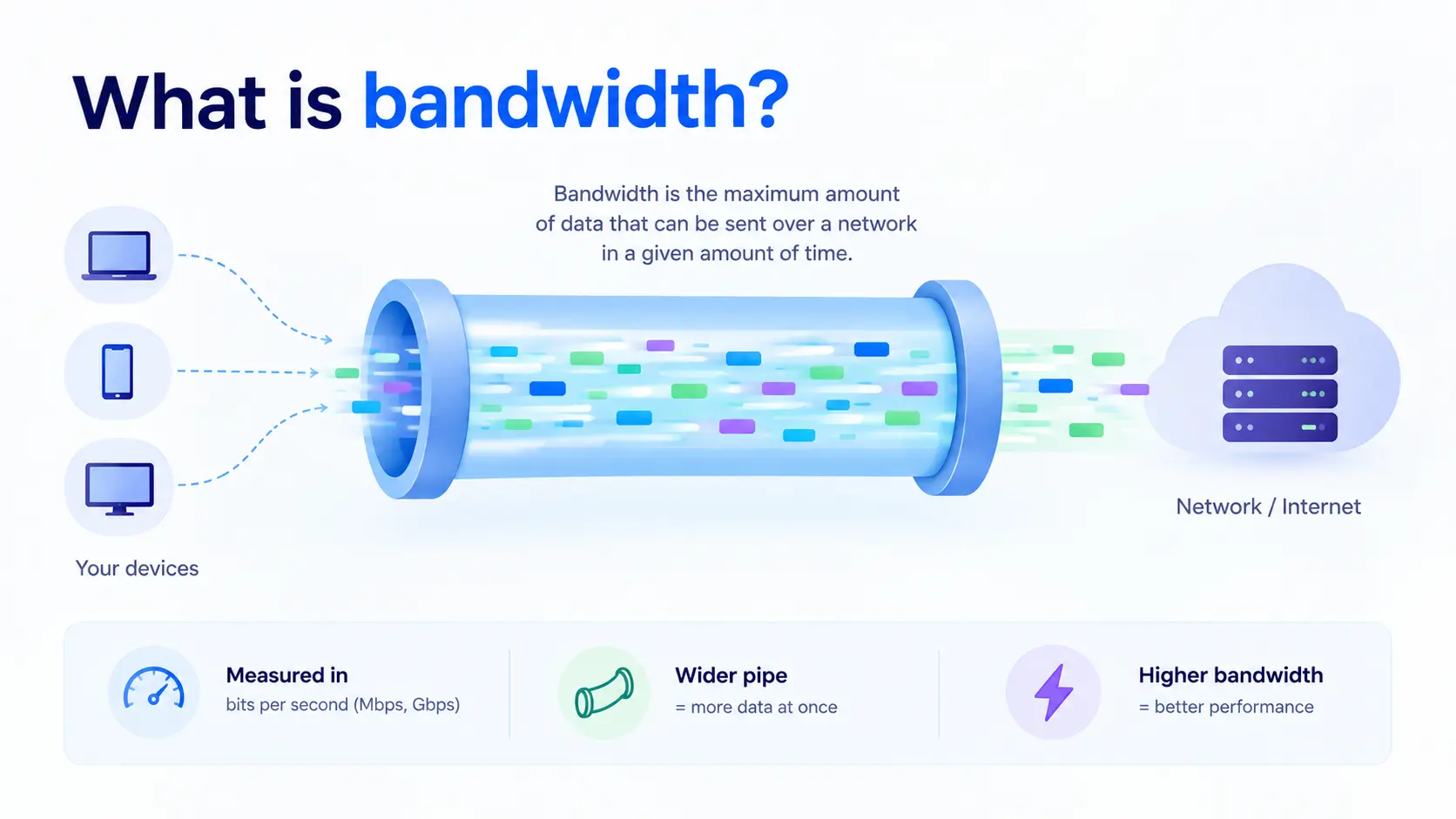
- Volumetric attacks: Flood the target with sheer traffic volume, aiming to saturate its available bandwidth entirely. Measured in bits per second (Gbps or Tbps).
- Protocol attacks: Exploit weaknesses in network protocols (like TCP or DNS) to exhaust server resources, rather than just bandwidth.
- Application-layer attacks: Target the application itself, mimicking real user requests (like repeated page loads) to exhaust server processing power, harder to detect since the traffic can look like normal usage.
Many real-world attacks combine more than one type at once, to overwhelm defenses on multiple fronts simultaneously.
How big can a DDoS attack get
Attack sizes have grown dramatically in recent years. The largest publicly recorded DDoS attack peaked at 31.4 Tbps, mitigated by Cloudflare in late 2025, and lasted only 35 seconds, but that was enough to demonstrate just how much traffic modern botnets can generate in a short burst. Most attacks businesses actually face are far smaller, but even a few gigabits per second is enough to knock an unprotected server offline.
Signs you might be under a DDoS attack
Below are the signs of being under a DDoS aarack:
- A website or service suddenly becomes very slow or completely unreachable
- An unusual spike in traffic from a wide range of IP addresses
- A specific service or port receiving abnormally high request volumes
- Legitimate users unable to access the service, while server resources show unusually high load
How to protect against DDoS attacks
The following are the pointers that can be used to protect against DDoS attacks:
- DDoS mitigation services: Purpose-built services detect and filter malicious traffic before it reaches your server, often automatically.
- Rate limiting: Restrict how many requests a single source can make in a given time window, slowing down abusive traffic patterns.
- CDN and traffic distribution: Spreading traffic across multiple servers or edge locations makes it harder for an attack to overwhelm any single point.
- Firewalls and traffic filtering: Block traffic matching known attack patterns before it reaches your application.
- Redundant infrastructure: Extra server capacity gives you a buffer to absorb sudden traffic spikes without going down immediately.
Most businesses don’t build DDoS protection from scratch. It’s typically handled at the infrastructure or network layer, by the hosting or cloud service provider, rather than something each application manages on its own.
Where DDoS protection fits in your infrastructure
DDoS mitigation usually works alongside load balancing, which is already built to spread traffic across multiple servers, making it a natural first line of defense against volumetric attacks. Latency also matters in infrastructure closer to your users; lower baseline latency tends to have more headroom to absorb sudden traffic spikes before performance visibly degrades.