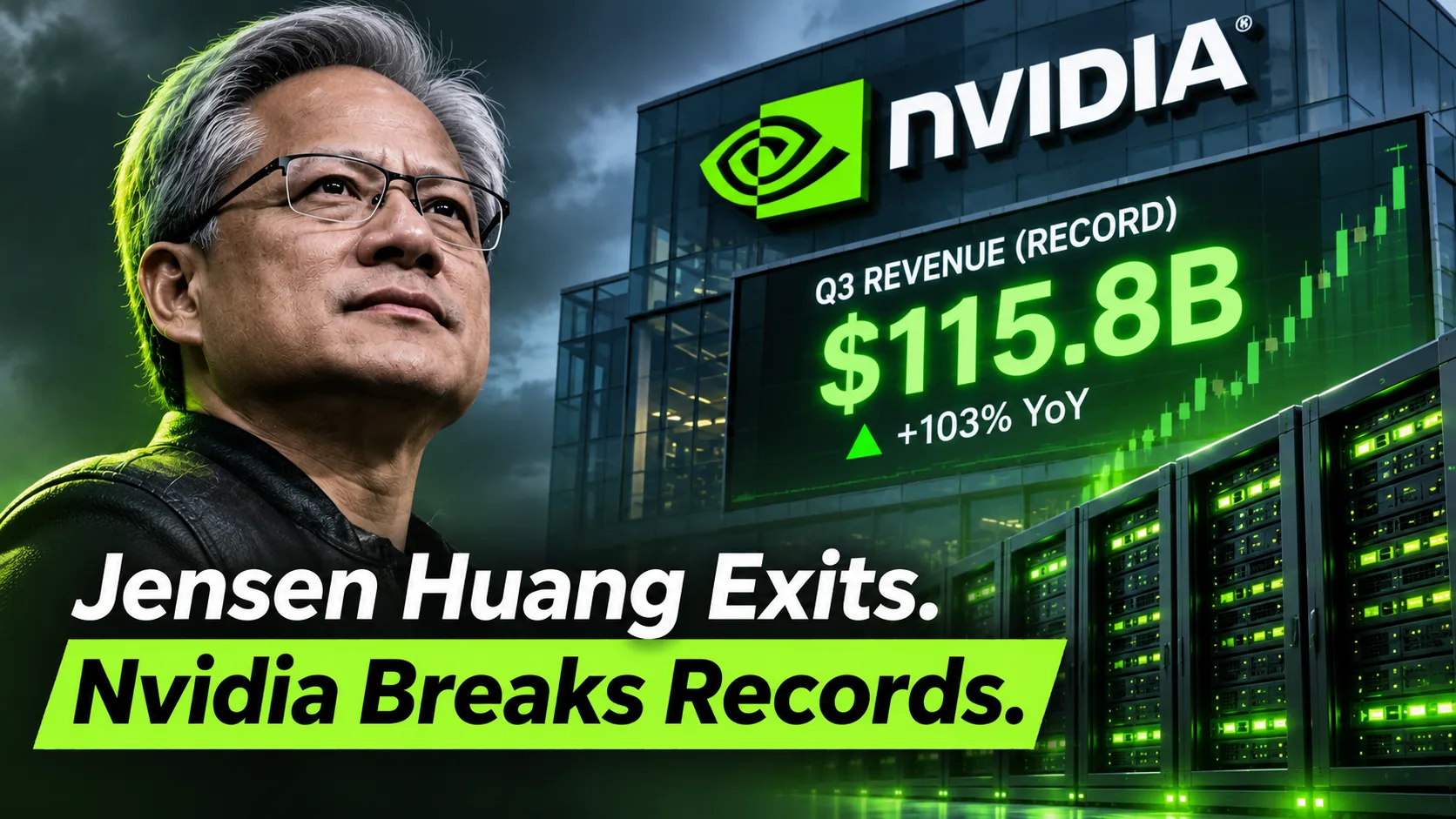
Jensen Huang returned as Nvidia’s CEO on 23 November, 11 days after his resignation. His reinstatement resolves the company’s immediate leadership uncertainty, but questions surrounding export controls and access to advanced computing capacity remain.
That same day, the US Commerce Department added Singapore-based Megaspeed International and six other companies to its Entity List. The move follows a new export-control rule released on 16 November addressing remote access to advanced chips through data centres.
As we covered in our previous newsroom article, demand for Nvidia’s GPUs remains strong, although financing continues to be a consideration for infrastructure providers. The latest developments bring another factor into focus: who can access that computing capacity and under what conditions.
What has changed at Nvidia?
Nvidia’s board unanimously voted to reinstate Huang as president, CEO and board director, reversing its position from 17 November, when it had ruled out his return.
According to Nvidia’s announcement on 23 November, the board received input from senior US government officials and concluded that Huang’s reinstatement posed no national security risk. His return followed public intervention from US President Donald Trump.
“The NVIDIA Board of Directors has made the correct and proper decision to return Jensen Huang to the position of CEO…On a personal note, I have gotten to know Jensen, and he is a Great Patriot and National Treasure…Congratulations to Jensen, the NVIDIA Board, to the People of the United States — and, indeed, the World!,” Trump wrote in a post on Truth Social following Jensen’s reappointment.
However, the reinstatement does not bring the investigations to an end. Nvidia confirmed that:
- Its independent investigation will continue, with Huang’s cooperation.
- A National Security and Export Control Committee has been formed to oversee trade compliance and national security risks.
- The company has begun searching for a chief compliance officer.
- Nvidia will continue cooperating with government investigations and inquiries.
The leadership question has been settled for now. The regulatory questions have not.

Source: Trump Truth on X Social Media Post
What did the USA do?
Two separate export-control actions took place within a week, addressing different aspects of access to advanced AI technology.
16 November: Restrictions on remote access to advanced chips
The Bureau of Industry and Security (BIS) released an interim final rule titled Addressing Remote Access to Advanced Semiconductors, which took effect on 19 November.
The main provisions include:
- Licensing requirements for covered advanced computing items intended for data centres providing significant computing capacity to companies headquartered, or whose ultimate parent is headquartered, in China, Macau or other specified jurisdictions.
- A computing performance threshold of more than 12 million aggregate Total Processing Performance (TPP), as outlined in Pillsbury’s analysis of the rule.
- A 90-day licensing window for existing data centre operators providing qualifying computing services who wish to continue doing so.
- Additional destination-based licensing requirements covering Brazil, Indonesia, Malaysia, Singapore and Thailand.
The rule also formally rescinds the earlier AI Diffusion Rule.
23 November: Megaspeed added to the Entity List
The Commerce Department announced the addition of Megaspeed International and six other companies operating across Singapore, Malaysia and Thailand to its Entity List.
The designation imposes licensing restrictions on transactions involving the listed companies and items subject to US export regulations.
Megaspeed has been under US investigation since 2024 over the possible diversion of advanced Nvidia chips to China. The company maintains that its operations comply with applicable laws, including US export controls. Singapore has also confirmed that its investigation will continue.
The listing is a regulatory action, not a criminal conviction or final finding of wrongdoing.
Why does remote GPU access matter now?
Cloud computing allows businesses to access advanced GPUs without purchasing or physically importing the hardware. A company can train or run AI models using infrastructure located in another country.
This creates a distinction between where a chip is deployed and where its computing power is consumed.
The new remote-access rule addresses this distinction. Under specified conditions, licensing requirements can apply regardless of where a data centre is located, depending on the identity of the customer, its ultimate parent company and the volume of computing power provided.
The Megaspeed listing addresses a separate concern: the role of specific companies in the potential diversion of controlled technology.
Together, the two actions extend regulatory attention beyond the physical movement of advanced chips to include how their computing capacity is accessed.
For GPU cloud providers, the location of their infrastructure is therefore only one part of the compliance question.
What does it mean for teams buying GPU capacity?
For businesses purchasing GPU capacity, hardware availability, pricing and delivery timelines remain important. The latest export-control developments add regulatory exposure to those considerations.
Four questions follow for teams evaluating GPU cloud providers:
- Customer verification: How does the provider verify its customers, their corporate ownership, and the intended use of computing capacity?
- Infrastructure location: Where are the GPUs deployed, and what export-control requirements apply to the hardware and its use?
- Regulatory exposure: Could the provider’s existing customer relationships or international operations affect its ability to procure additional hardware or continue delivering contracted capacity?
- Contract terms: What happens to contracted GPU capacity, service commitments and advance payments if regulatory changes affect service delivery?
These are procurement considerations, not conclusions about individual providers. The new rule does not impose a blanket restriction on GPU cloud services or their customers.
Providers and buyers should obtain their own legal advice on how the requirements apply to their operations.
What does this mean for India’s GPU ecosystem?
India is not among the five countries newly subject to the destination-based licensing requirements. However, the remote-access provisions are not limited to those countries.
This distinction matters as India expands its AI computing infrastructure and develops internationally connected GPU deployments.
Several large infrastructure commitments are already underway:
- Yotta Data Services announced plans to deploy 20,736 Nvidia Blackwell Ultra GPUs, with more than 10,000 committed to the IndiaAI Mission.
- AM Intelligence has announced plans involving approximately 29,000 Nvidia Rubin GPUs across India and Malaysia.
- L&T’s Vyoma is developing a 10,000-GPU Nvidia B300 facility in Chennai for US-based Together AI.
These figures represent announced commitments and deployment plans, not necessarily operational capacity.
The AM Intelligence project illustrates the international nature of AI infrastructure development, with planned deployments across India and Malaysia, one of the countries covered by the new destination-based controls.
India’s exclusion from that list does not automatically exempt India-based infrastructure from the separate end-use provisions. Their applicability depends on the hardware, customer relationships, computing volumes, and other conditions specified in the rule.
As Indian GPU cloud providers serve both domestic and international workloads, customer verification and regulatory compliance may become increasingly relevant to infrastructure planning.
What to watch next
Four developments will provide greater clarity on how far the regulatory scrutiny extends:
- Congressional scrutiny: Huang is scheduled to appear before US House committees on 1 December, followed by Nvidia’s general counsel on 2 December. A public Senate hearing is scheduled for 3 December.
- Nvidia’s compliance measures: How the newly formed committee oversees export compliance and what changes follow from the ongoing investigations.
- The remote-access rule: Public comments are due by 19 January 2027, while the 90-day licensing window for qualifying existing data centre operations is underway.
- The Megaspeed investigation: Whether the ongoing investigations result in further regulatory action or formal findings.
Huang’s return settles Nvidia’s immediate leadership question. Its latest earnings indicate that demand for advanced GPUs remains strong.
For teams buying GPU capacity, however, availability is not the only consideration. Whether teams can finance, deploy, and access that capacity under evolving regulatory requirements remains an open question.