What is generative AI?
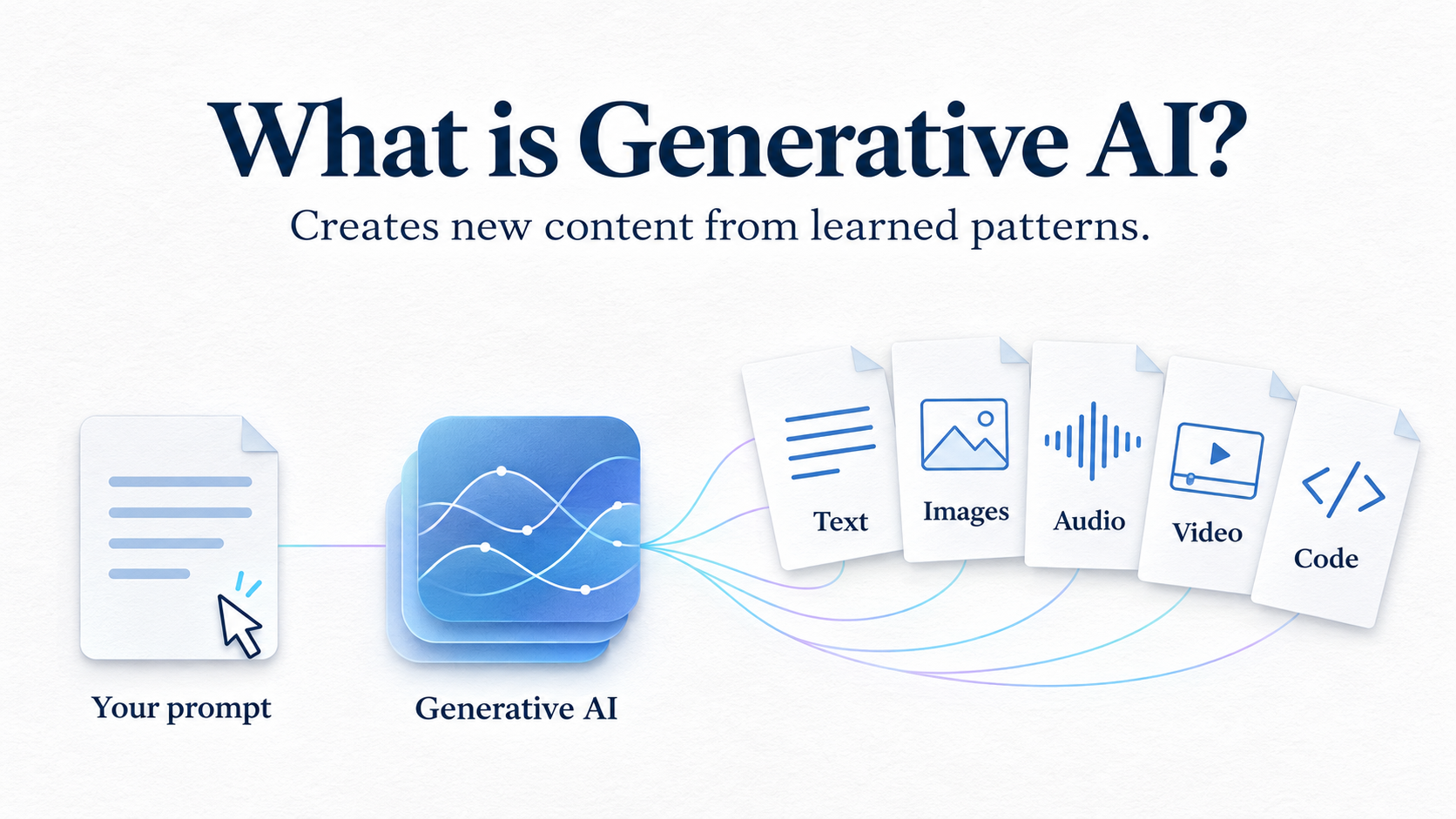
Generative AI is a type of AI that creates new content, such as text, images, audio, video, or code, based on patterns it learned from existing data. You give it a prompt, and it produces something new that fits the request.
Think of a student who has read thousands of books. They do not copy a page. They write something new in a similar style. Generative AI works in a similar way, but at a much larger scale.
How generative AI works
Generative AI is built on machine learning models that are trained on very large datasets. The process has three main steps:
- Training: The model studies huge amounts of data, such as text, images, or code, and learns the patterns in it. This takes a lot of AI compute.
- Prompting: You give the model an instruction or a starting point, such as a question or a description of an image.
- Generating: The model uses what it learned to produce new output, one piece at a time. A text model predicts the next word. An image model builds the picture step by step.
The output is new, but it is shaped by the patterns in the training data.
Common types of generative AI models
Below are the common types of generative AI models:
- Transformer models: The base of most text models. They use a method called self-attention to understand how words relate to each other. LLMs are built on this.
- Diffusion models: Used for images and video. They start with random noise and clean it up, step by step, into a picture that matches the prompt.
- GANs (generative adversarial networks): Two models compete. One creates content, and the other judges it. Over time, the creator gets better. GANs are often used for realistic images.
- VAEs (variational autoencoders): Learn a compressed version of data and use it to create new, similar samples.
What generative AI can create
The table contains what a generative AI can create:
| Type | Examples of what it creates |
| Text | Articles, emails, summaries, translations, chat replies |
| Images | Illustrations, product photos, designs, edited pictures |
| Audio | Speech, music, sound effects, voice clones |
| Video | Short clips, animations, edited footage |
| Code | Functions, scripts, tests, bug fixes |
| Data | Synthetic datasets used for testing and training |
Generative AI examples
The following are the generative AI examples:
- Text and chat: ChatGPT, Gemini, and Claude
- Image generation: Midjourney, DALL-E, and Stable Diffusion
- Code assistants: GitHub Copilot and similar tools
- Audio and video: Tools that generate speech, music, and short video clips
Generative AI vs traditional AI
The table below draws a comparison between generative AI and traditional AI:
| Traditional AI | Generative AI | |
| Main job | Analyze data and predict or classify | Create new content |
| Typical output | A label, a score, or a prediction | Text, images, audio, video, or code |
| Example | A spam filter that marks an email as spam | A tool that writes a new email for you |
| Training data | Often smaller and labeled | Usually very large and mostly unlabeled |
Traditional AI answers questions like “Is this transaction fraud?” Generative AI answers requests like “Write a reply to this customer.”
Generative AI vs LLM
These terms overlap, but they are not the same:
- Generative AI is the broad category. It covers any AI that creates new content, in any format.
- An LLM is one kind of generative AI model. It works with text.
So every LLM is generative AI, but not all generative AI is an LLM. An image generator is generative AI, but it is not an LLM.
Generative AI vs AI agents
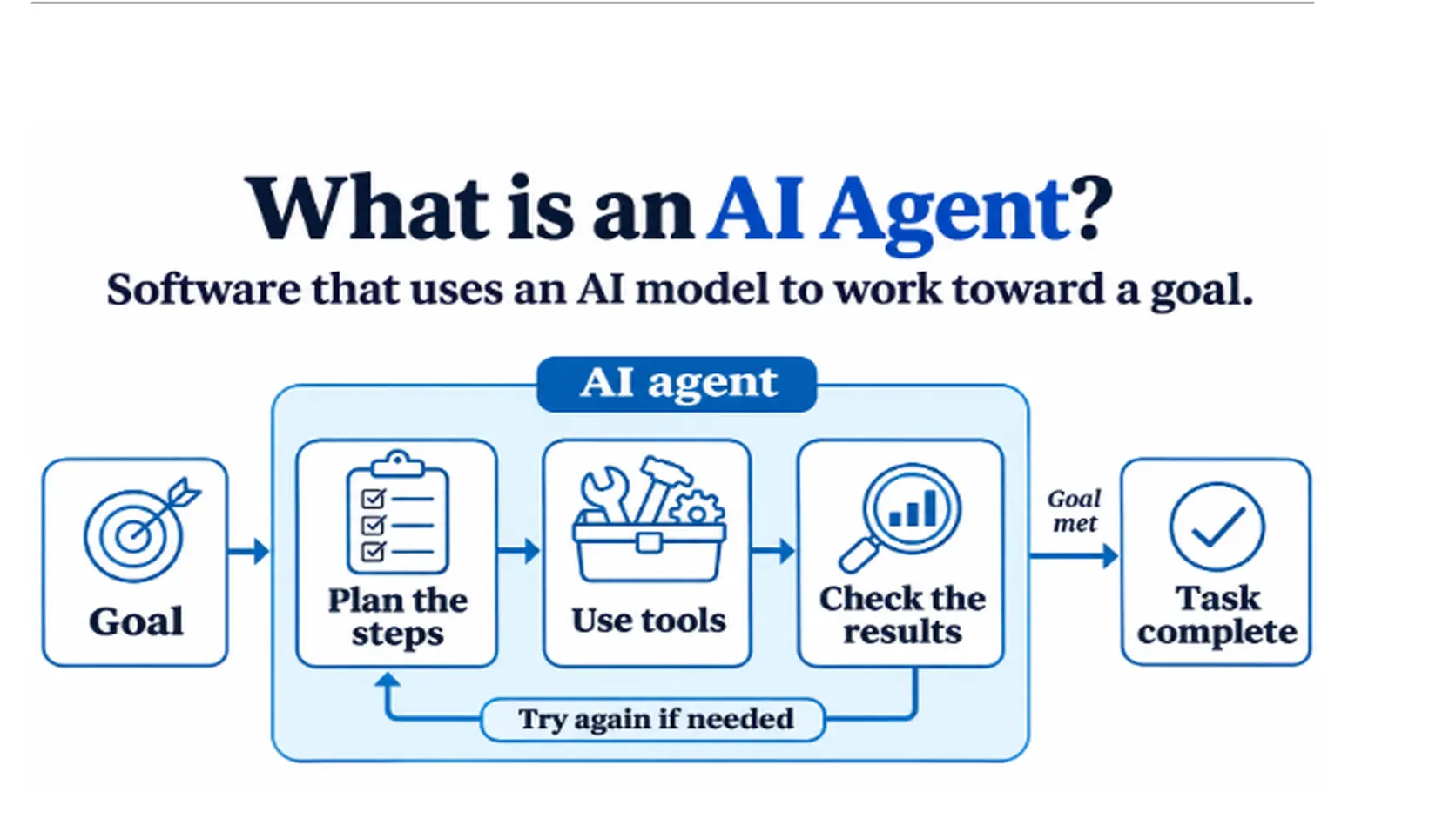
Generative AI creates content when you ask. An AI agent goes further. It uses a generative model to plan and take actions toward a goal, such as calling tools or sending a request to an API. Many agents are built on top of generative AI.
Common use cases
The common use cases of generative AI are as follows:
- Content creation: Drafting blog posts, product descriptions, and social posts.
- Customer support: Answering common questions and drafting replies.
- Software development: Writing code, explaining it, and finding bugs.
- Design and marketing: Creating images, mockups, and ad variations.
- Summarizing and search: Turning long documents into short summaries, or answering questions from company data.
- Translation and localization: Converting content between languages.
- Synthetic data: Creating realistic test data without using real customer records.
Benefits of generative AI
The following are the benefits of generative AI:
- Speed: Produces first drafts in seconds.
- Scale: Creates large amounts of content or variations quickly.
- Accessibility: People without design or coding skills can create more.
- Productivity: Takes over repetitive writing and formatting tasks.
Limitations and risks
The limitations and risks are as follows:
- Hallucinations: The model can produce confident wrong answers. Always check important facts.
- Bias: It can reflect biases found in its training data.
- Copyright and ownership: Questions remain about training data and who owns the output.
- Privacy: Sensitive data typed into a tool may be stored or used in ways you did not intend.
- Misuse: It can be used to create fake content, scams, or phishing messages.
- Cost: Training and running large models needs expensive GPUs and a lot of power.
A common way to reduce wrong answers is retrieval-augmented generation (RAG), where the model looks up trusted information before it answers.
What infrastructure generative AI needs
Generative AI is heavy on compute, in two stages:
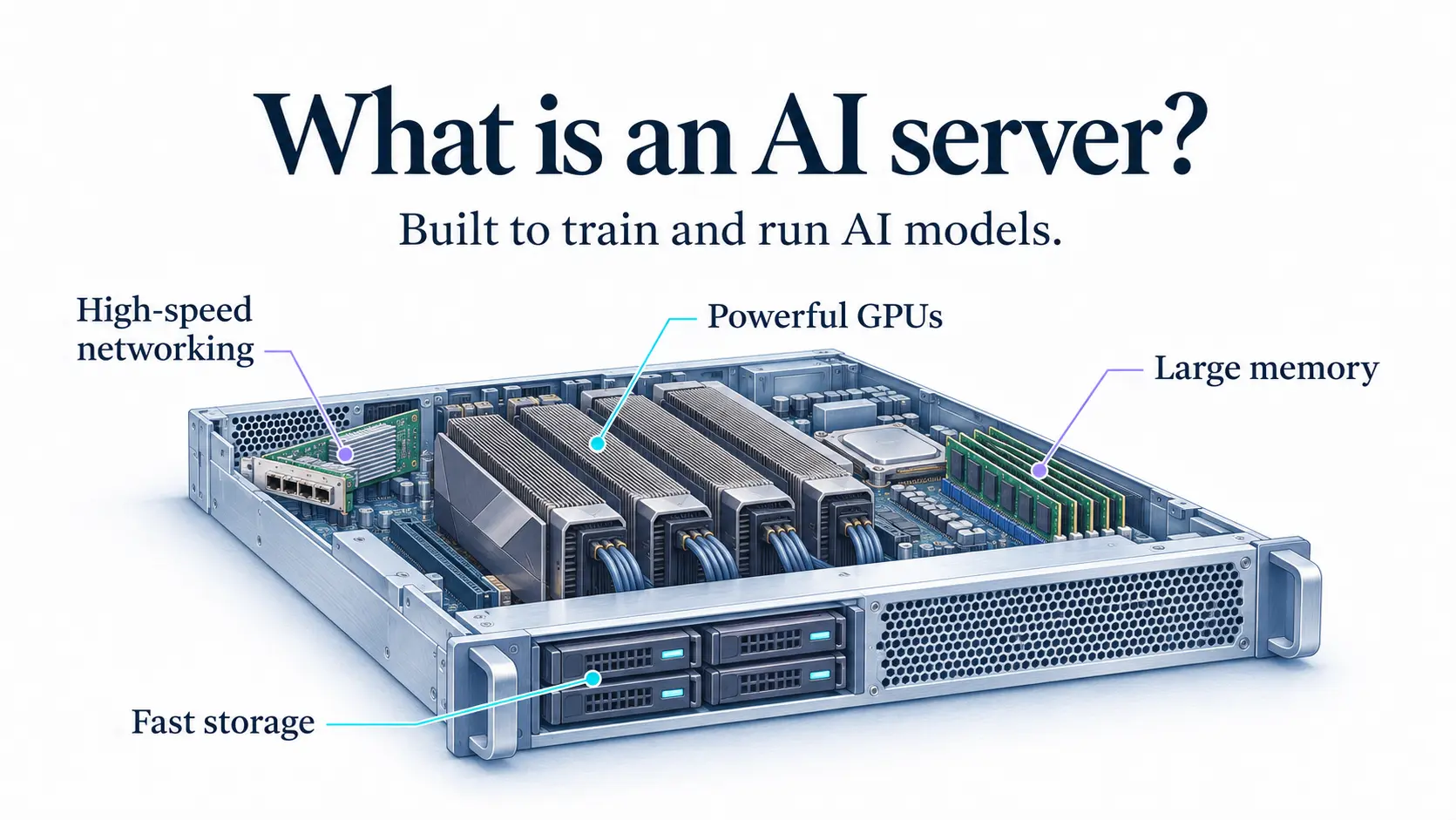
- Training or fine-tuning: Needs many GPUs working together, fast links between them, and high-throughput storage. The model’s size decides how much VRAM you need, and the speed depends on FLOPs.
- Inference: Needs low latency and steady availability, because every user request runs the model.
Most teams rent this through GPU cloud instead of buying hardware. Fast storage such as NVMe SSD and object storage for datasets and checkpoints helps keep the GPUs busy.
Where generative AI fits
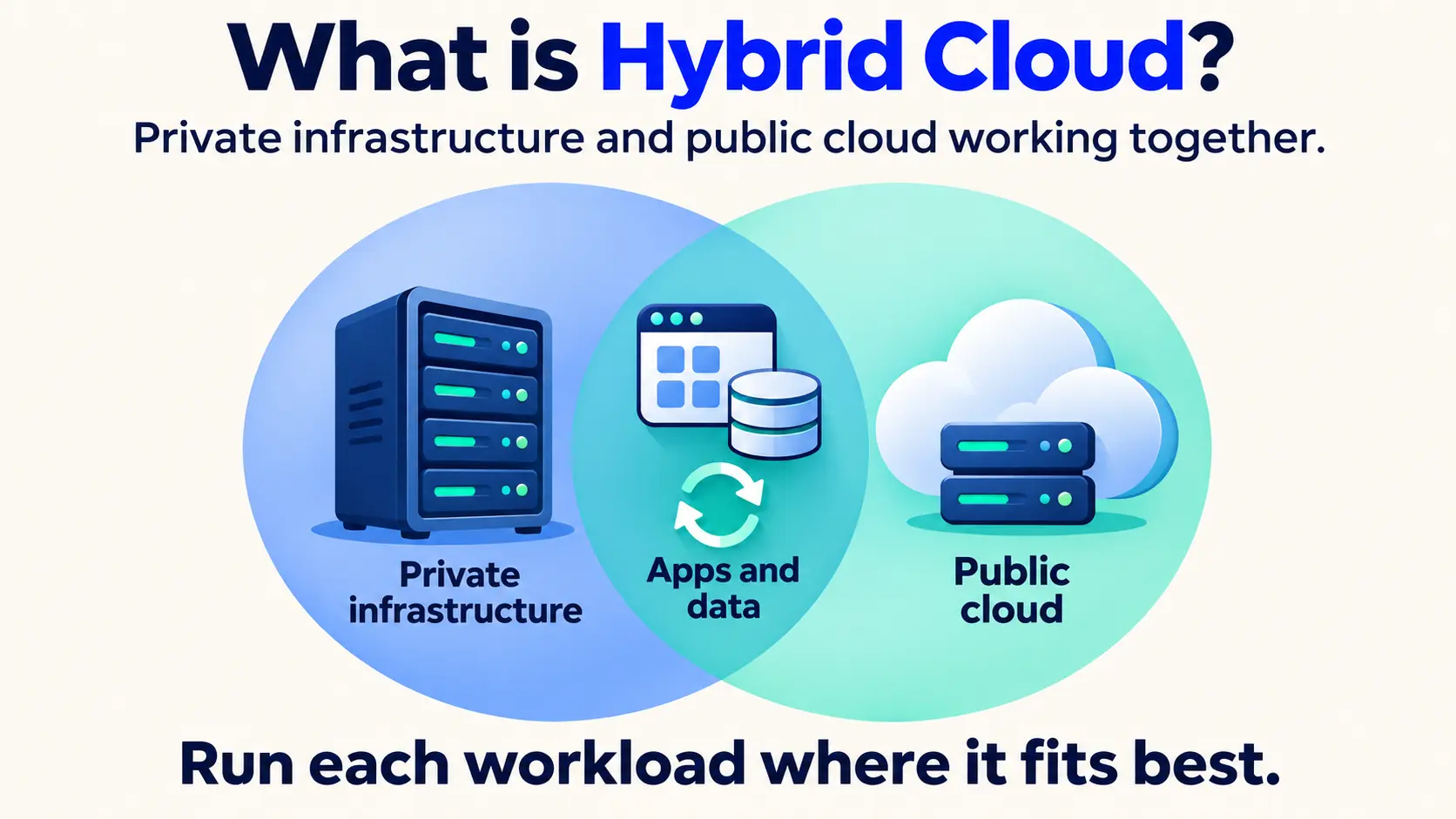
Generative AI is a branch of AI built on machine learning, and it is one of the biggest reasons demand for GPU power has grown so fast. It also runs on cloud computing, since few teams own the hardware needed to train and serve these models.