AI Model Deployment is the process of making a trained artificial intelligence (AI) model available for real-world use by integrating it into an application, website, cloud platform, or production environment. It allows users and software systems to interact with the model and receive predictions, recommendations, or AI-generated outputs.
While AI model training focuses on teaching a model to recognize patterns from data, deployment focuses on making that trained model accessible, reliable, and efficient for practical applications.
How Does AI Model Deployment Work?
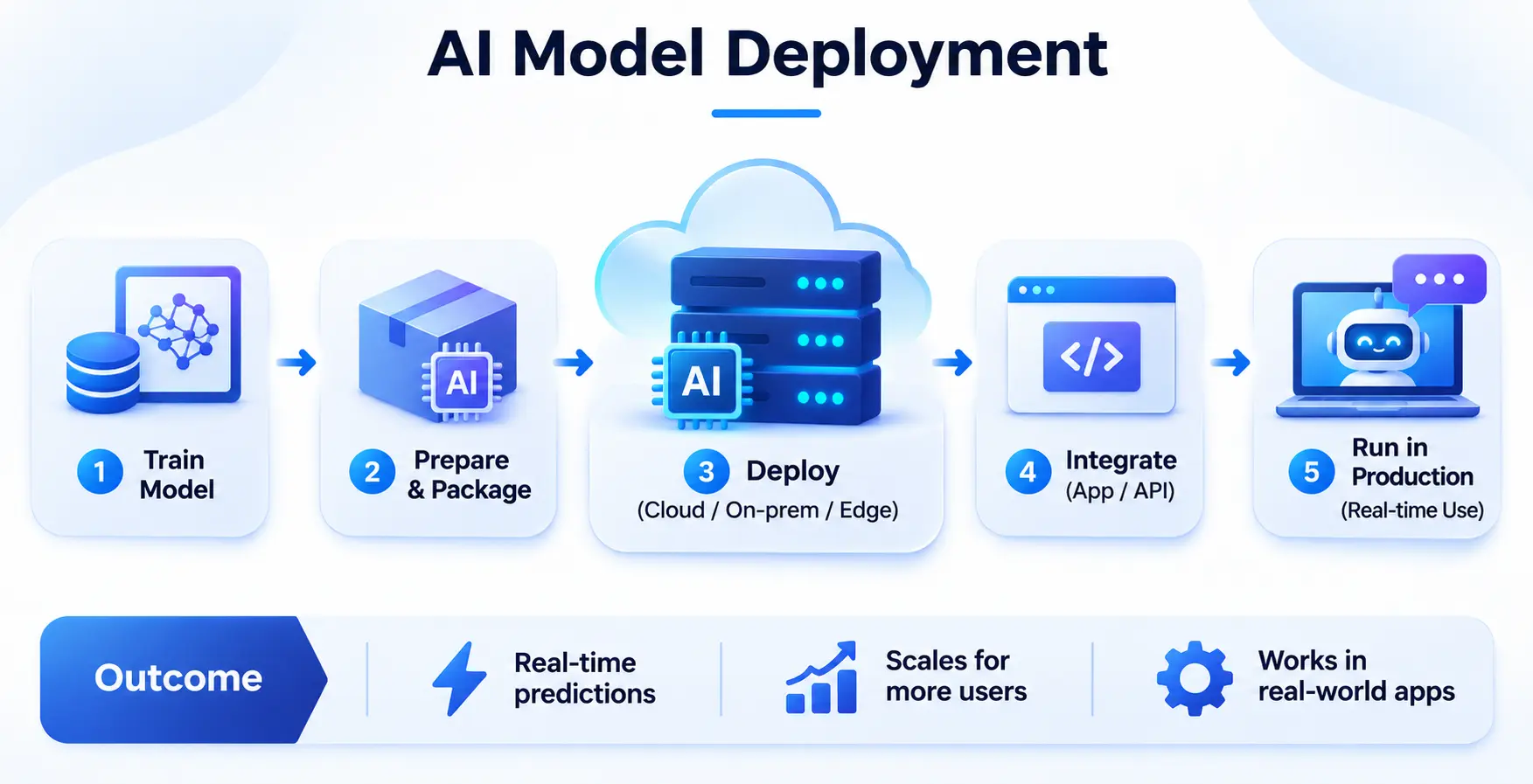
AI model deployment typically involves five key stages:
- Model Preparation: A trained AI model is tested, optimized, and packaged for use in a production environment.
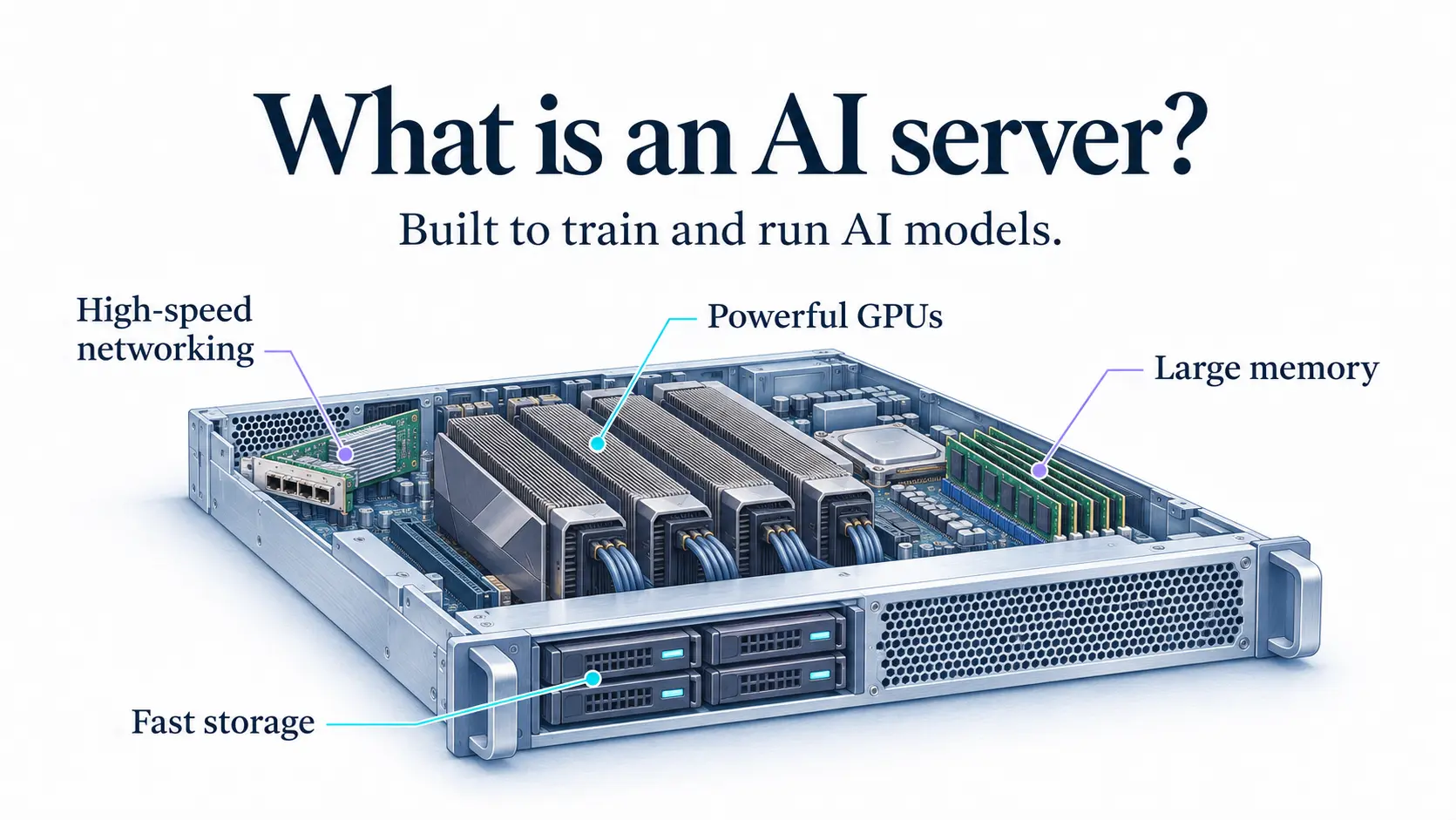
- Infrastructure Setup: The required computing resources, such as CPUs, GPUs, memory, and storage, are configured on cloud servers or on-premises infrastructure.
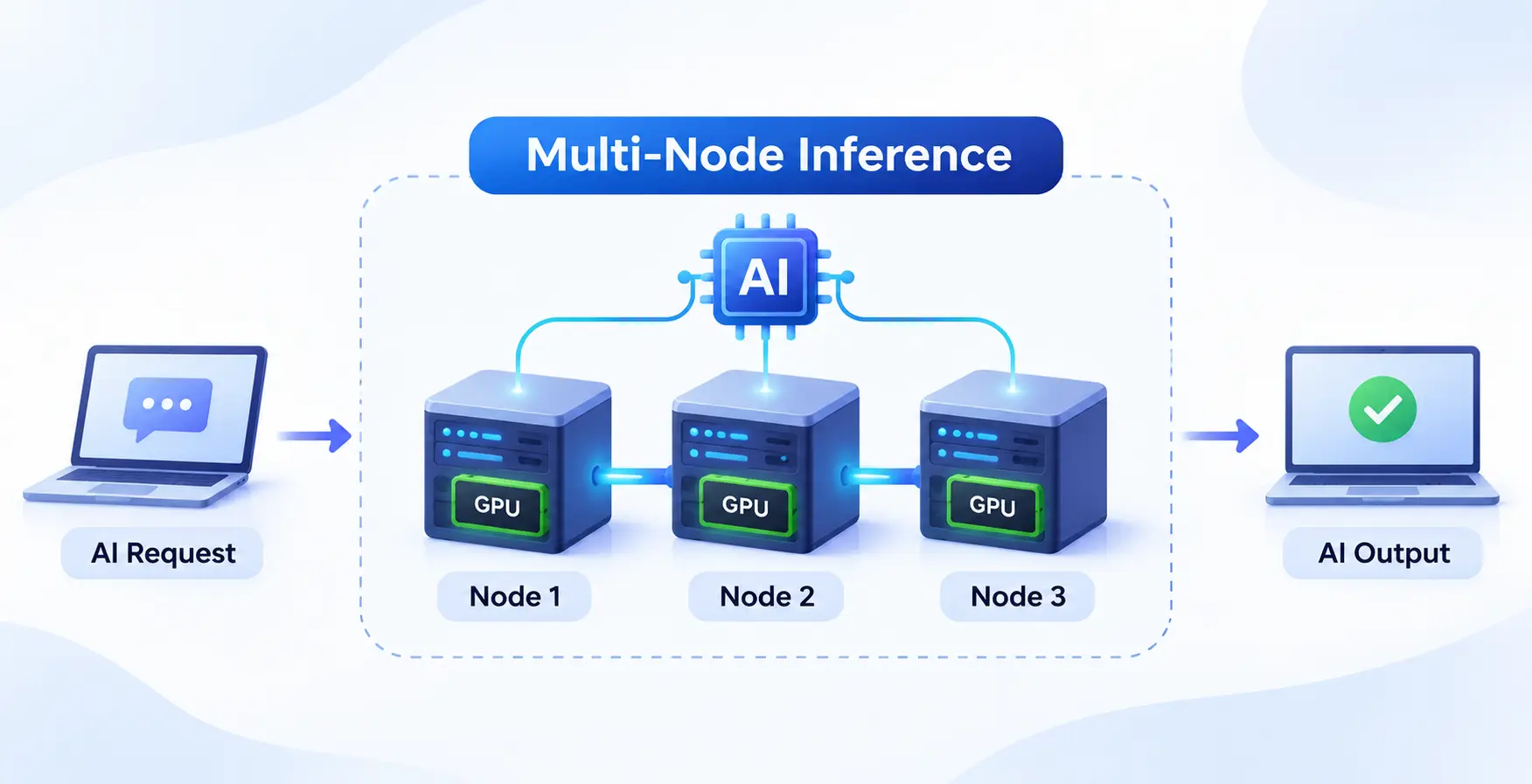
- Model Serving: The model is hosted using an inference server, API endpoint, or application service that accepts input requests and returns predictions.
- Application Integration: Developers connect the deployed model to websites, mobile applications, business software, or other systems.
- Monitoring and Maintenance: Model performance, response times, resource usage, and prediction quality are monitored to ensure reliable operation.
For example, a company developing an AI chatbot can deploy a trained language model on a GPU server and connect it to its customer support application through an API.
Key Features of AI Model Deployment
- Real-Time Inference: Enables AI models to process requests and generate outputs when needed.
- Scalability: Supports increasing workloads and concurrent users by allocating additional computing resources.
- API Integration: Allows applications to communicate with deployed AI models.
- Performance Optimization: Uses techniques such as quantization, batching, and caching to improve inference efficiency.
- Monitoring and Reliability: Tracks model performance, availability, and infrastructure health.
AI Model Training vs. AI Model Deployment
| Feature | AI Model Training | AI Model Deployment |
| Purpose | Teach the model using data | Make the model available for use |
| Primary Activity | Learning and optimization | Inference and serving |
| Infrastructure | Often GPU-intensive compute | CPU or GPU inference servers |
| Input | Training datasets | Real-world user requests |
| Output | Trained model | Predictions or generated responses |
Common AI Model Deployment Methods
AI models can be deployed through different infrastructure environments:
- Cloud Deployment: Hosting models on cloud-based computing infrastructure for flexible scaling.
- On-Premises Deployment: Running models on an organization’s own servers for greater infrastructure control.
- Edge Deployment: Executing models directly on devices such as smartphones, cameras, or industrial equipment.
- Containerized Deployment: Packaging models and their dependencies using technologies such as Docker and Kubernetes.
Why Is AI Model Deployment Important?
AI model deployment bridges the gap between AI development and practical business applications. Without deployment, a trained model remains an experimental asset rather than an accessible service.
Effective deployment helps organizations deliver AI-powered applications, automate workflows, serve users at scale, and manage inference costs.
It also requires ongoing monitoring, security controls, and model updates to maintain performance and reliability.
In simple terms, AI model deployment means taking a trained AI model and making it available for people or applications to use in real-world situations.